
I n the halls of a modern university or the corridors of a sprawling hospital network, the mission is clear: serve the individual.
Whether that individual is a prospective student navigating financial aid or a patient seeking a specialist, their digital journey should be as compassionate and clear as their in-person experience.
Yet, for too long, content-heavy organizations in healthcare and education have grappled with a digital paradox. They possess vast amounts of valuable information but struggle to deliver it effectively across disjointed systems.
By 2026, the solution has shifted from simple content management to comprehensive Digital Experience Platforms (DXPs). These platforms are no longer just “nice-to-have” upgrades; they are the critical infrastructure unifying fragmented digital channels into seamless, personalized journeys.
The Challenge of Fragmentation in Mission-Driven Sectors
Healthcare and education share a common struggle: complexity. A single university might manage hundreds of microsites for different departments, alumni portals, and student learning systems. Similarly, a healthcare provider navigates patient portals, appointment scheduling tools, and vast libraries of health information.
Historically, these systems operated in silos. A patient might receive a personalized email about a check-up but land on a generic homepage that doesn’t recognize them. A student might log into a learning portal that feels entirely disconnected from the university’s main website.
This fragmentation isn’t just an annoyance; it’s a barrier to trust. When digital experiences feel disjointed, users feel unseen.
Operational inefficiency is the other side of this coin. Marketing and IT teams waste countless hours duplicating content across platforms or wrestling with legacy systems that don’t talk to each other. In 2026, with budgets tighter and expectations higher, this inefficiency is unsustainable.
The DXP Solution: From Chaos to Cohesion
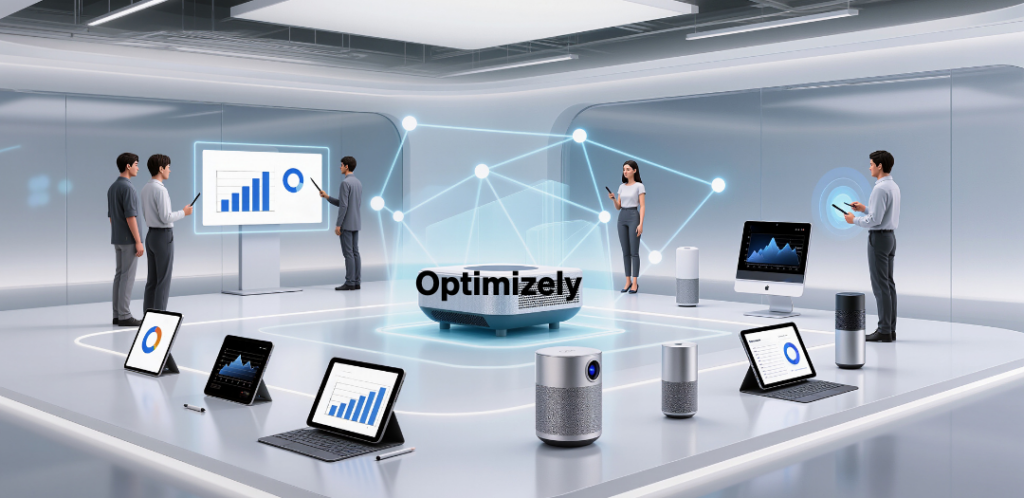
A Digital Experience Platform (DXP) solves these challenges by acting as the central nervous system of an organization’s digital presence. Unlike a traditional Content Management System (CMS), which focuses primarily on creating and publishing web pages, a DXP integrates content, data, and commerce to orchestrate experiences across every touchpoint—web, mobile, email, and even IoT devices.
For medical and educational institutions, this shift is transformative.
1. Unifying the Digital Ecosystem
Imagine a hospital system where the website, the mobile app, and the patient portal share a single brain. A DXP makes this possible through API-first architectures.
In 2026, the trend toward composable architecture has reached maturity. Organizations no longer have to buy a monolithic suite where they only use 40% of the features. Instead, they can assemble a “best-of-breed” stack. They might choose a DXP like Optimizely for content and experimentation, integrate it with a specialized patient record system (EMR), and connect a separate marketing automation tool.
This modularity allows for seamless integration. Data flows freely between systems, meaning the platform “knows” the user regardless of where they interact. For a university, this means a student’s interaction with a recruitment ad can inform the content they see on the homepage, creating a sense of belonging before they even apply.
2. The Era of Hyper-Personalization
Personalization in 2026 goes far beyond “Hello, [First Name].” It is about context, intent, and anticipation.
In healthcare, trust is paramount. A DXP powered by AI-driven personalization can analyze user behavior—safely and compliantly—to serve relevant content. If a user has been reading articles about prenatal care, the homepage can dynamically shift to highlight obstetrics providers and birthing classes rather than generic urgent care hours.

Recent data underscores the impact of this approach. Research indicates that organizations implementing advanced personalization see revenue uplifts of up to 15-20% and significant improvements in customer retention. For non-profits and educational institutions, “revenue” translates to higher enrollment yields and increased donor engagement.
In education, this means tailoring the journey based on the prospect. An international applicant sees visa information and virtual tour options immediately. A returning alum sees continuing education courses and donation opportunities. The DXP ensures that the right message finds the right person at the exact moment of relevance.
3. Operational Efficiency and Scalability
For IT and marketing teams, a DXP is a liberation tool. Instead of managing five different CMS instances, teams work from a centralized hub. Content is created once and deployed everywhere (COPE).
This scalability is crucial for organizations that need to pivot quickly. During a public health crisis or a campus emergency, the ability to push consistent, accurate updates across all channels instantly is a safety requirement, not just a marketing convenience.
Trends Defining 2026: AI and Omnichannel Maturity
Two major trends are shaping how medical and educational organizations utilize DXPs this year:
AI as the Co-Pilot
Artificial Intelligence has moved from a buzzword to a utility. In modern DXPs, AI engines automatically tag content, making it easier to find and reuse. They analyze traffic patterns to predict which content will perform best.
Generative AI helps content teams produce drafts for hundreds of service pages or course descriptions, which human editors then refine. This human-in-the-loop approach maintains the authoritative voice required in regulated industries while drastically increasing output speed.
True Omnichannel Integration
The distinction between “online” and “offline” has blurred completely. A DXP connects the digital to the physical.
- In Healthcare: A patient checks in for an appointment via the app. The DXP triggers a notification to the front desk and, post-visit, automatically sends digital discharge instructions and a satisfaction survey to the patient’s preferred channel.
- In Education: A student attends an open house event. Their check-in connects to their digital profile. Later that day, they receive a personalized email with links to the specific programs they visited.
Security and Compliance: The Non-Negotiables
For medical organizations, security isn’t a feature; it’s the foundation. Medical organizations must navigate HIPAA; educational institutions handle FERPA data. Modern DXPs in 2026 are built with these rigorous standards in mind. They offer robust identity management, granular user access controls, and secure data storage options (often cloud-based with specific compliance certifications).
The Human Element of Technology
Technology is only as good as the strategy behind it. A DXP is a powerful engine, but it needs a skilled driver. Implementing these platforms requires a shift in mindset. It demands collaboration between IT, marketing, and operational teams. It requires viewing the user journey not as a series of transactions, but as a relationship that evolves over time.
Next Steps for Your Organization
If your organization is struggling with disjointed systems, duplicated efforts, or a user experience that feels stuck in the last decade, it is time to evaluate your digital maturity.
Ask yourself:
- Does our website speak to everyone generally, or to individuals personally?
- How much time does our team spend managing the tool versus managing the strategy?
- Are our systems secure, scalable, and ready for what comes next?
The transition to a Digital Experience Platform is a journey, but it is one you do not have to walk alone.


 By Chris Risner

 By Jason Lichon