A I is the new intern, strategist, and copywriter rolled into one and Shopify isn’t sitting this one out.
Enter Shopify Magic and Sidekick, the platform’s dynamic AI duo designed to simplify merchant life and boost productivity with a sprinkle of wizardry (and a whole lot of algorithms).
But how magical are they, really? And how do they stack up against other AI tools currently shaking up eCommerce? Let’s dig in.
What Is Shopify Magic?
Shopify Magic is Shopify’s built-in generative AI feature. It works behind the scenes to automate everything from product descriptions to marketing emails and customer replies. Think ChatGPT, but tailored to the daily grind of an eCommerce business.
Pros of Shopify Magic:
- Context-aware: Pulls info from your store’s product titles, categories, and past content to auto-generate high-quality copy.
- Multilingual capabilities: Great for global brands—generate content in multiple languages with ease.
- Integrated workflow: No copying/pasting between tools. It’s embedded right into the Shopify admin.
Cons of Shopify Magic:
- Limited customization: Unlike standalone AI tools, there are fewer prompts or advanced settings.
- Generic tone: The output can feel a little bland if you don’t manually refine the copy.
- Still evolving: It’s suitable for day-to-day help, but doesn’t replace a brand strategist or creative writer just yet.
What Is Shopify Sidekick?
Shopify Sidekick is like Clippy got a glow-up, drank a Red Bull, and earned an MBA in commerce. It’s a conversational assistant (powered by large language models like ChatGPT) that helps merchants manage their stores with natural language commands.
Want to “launch a summer sale on all sunglasses”? Type it in, and Sidekick gets to work.
Pros of Sidekick:
- Conversational interface: No need to know where settings live—ask.
- Time-saving: Automates tasks like report generation, inventory edits, or theme tweaks.
- Smart suggestions: Offers proactive tips based on your store’s performance.
Cons of Sidekick:
- Beta limitations: Not all features are currently available; rollouts have been implemented gradually.
- One-size-fits-all UX: May struggle with complex custom store setups or unique business logic.
- Dependence on Shopify data: Doesn’t integrate well with external tools (yet).
Shopify Magic vs. the Rest of the AI Realm
So how do Shopify’s AI tools stack up against the trendsetters in the AI space?
- ChatGPT + Zapier is great for power users and automation lovers.
- Content Agents shines for generating lots of marketing copy but lacks Shopify integration.
- Notion AI is your brainstorming buddy but doesn’t speak “commerce.”
- Shopify Magic & Sidekick win on convenience and seamless Shopify workflow integration.
| Feature | Shopify Magic & Sidekick | ChatGPT + Zapier | Content Agents | Notion AI |
|---|---|---|---|---|
| Built for Ecommerce | Yes | Not native (but customizable) | Yes | No |
| Workflow Integration | Native to Shopify | With setup | Basic eCommerce use | No: Mainly content |
| Ease of Use | Beginner-friendly | Needs tinkering | Yes | Yes |
| Customization | Basic prompt editing | Full control | Templates only | Contextual editing |
| Real-Time Store Management | Sidekick | No | No | No |
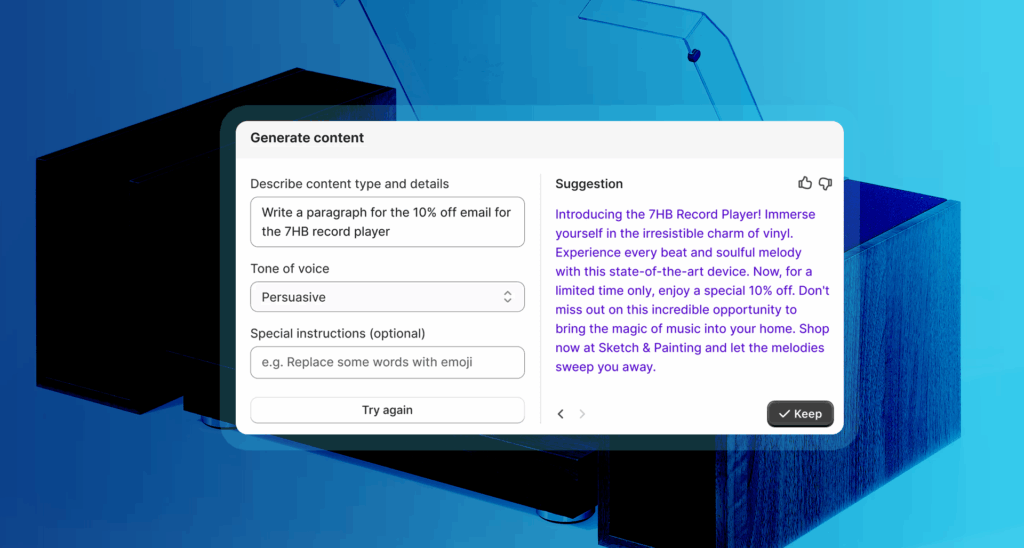
Shopify Magic and Sidekick aren’t just AI add-ons; they’re a glimpse of Shopify’s vision: an eCommerce backend where merchants spend less time managing and more time creating and scaling.
Are they perfect? Not yet. But they’re improving fast and offer a low-effort, high-impact way to leverage AI directly within your store. For store owners who don’t want to become prompt engineers or Zapier wizards, this could be the real magic.
Forward-thinking tip: The future of eCommerce AI lies in hyper-personalized, action-oriented assistants. Watch for Shopify to expand Sidekick’s skills into marketing, analytics, and maybe even a full-blown virtual operations manager. The AI arms race in eCommerce has only just begun.
SEO Has Grown Up. Has Your Strategy?
Search engine optimization isn’t what it used to be, and honestly, that’s a good thing. Gone are the days of stuffing keywords into thin content like it’s a piñata of search traffic. Google’s algorithms have matured (glow-up alert), and now they’re rewarding brands that do the same.
Enter Google’s Helpful Content Update.
Spoiler: It’s all about real value. That means informative, well-structured content that speaks to human beings, not just crawlers. If your site’s still leaning on fluff and filler, it’s time to rethink the game plan.
Page Experience Signals are front and center.
Mobile responsiveness, fast load times, intuitive navigation these aren’t just “nice to haves” anymore. They’re ranking factors. A clunky site? That’s SEO sabotage.
E-E-A-T: Experience, Expertise, Authoritativeness, Trustworthiness.
Especially for service-based industries, Google is sizing up how credible your content (and your brand) really is. Think: expert blogs, testimonials, case studies, the kind of stuff that says “we’ve got receipts.”
And about that AI-generated content…
Yes, it can help you scale. But the bots can’t fake authenticity. Google’s watching closely, and so are your users. You still need a strong editorial voice, clear value, and content that sounds like it came from a real person (preferably a smart and helpful one).
SEO is now less about tricking the algorithm and more about treating your visitors like actual people. Who knew? If your SEO strategy feels like it’s stuck in 2015, now’s the time to evolve. Because in 2025, only the most helpful, human, and high-performing content will survive.