W hen someone asks ChatGPT to recommend a B2B ecommerce platform, or asks Perplexity which agency specializes in Shopify migrations, the answer they get isn't a list of links. It's a synthesized response; pulled from sources the AI has already decided are authoritative.
If your brand isn’t one of those sources, you’re not in the conversation.
Generative Engine Optimization (GEO) is the discipline of ensuring your business is one of the sources AI platforms draw from when composing those answers. It sits at the core of BlueBolt’s GAO framework, alongside AEO and AIO, and it’s the component most directly tied to AI-driven discovery and brand visibility. GEO’s specific job is the middle layer: ensuring that platforms like ChatGPT, Perplexity, and Google AI Overviews recognize your brand as a credible, relevant source when they generate responses in your space.
This post covers what GEO is, why it’s structurally different from traditional SEO, and the specific steps BlueBolt uses to build AI citation authority for clients.
What is Generative Engine Optimization (GEO)?
GEO is one of three disciplines within BlueBolt’s GAO framework. Where AEO focuses on structured answers in traditional search, and AIO focuses on AI-powered website performance, GEO specifically addresses how generative AI platforms (ChatGPT, Perplexity, Gemini, Google AI Overviews) understand, reference, and recommend your brand.
The practical goal of GEO is simple: when an AI platform composes an answer relevant to your business, your content should be a source it draws from and your brand should be one it recommends.
Why GEO Matters for Website Businesses
AI search isn’t replacing traditional search overnight, but it’s already a parallel discovery channel that most businesses aren’t optimizing for. Here’s why that matters:
- Direct Responses Over Click-Throughs: Increasingly, users ask AI tools questions and receive direct answers instead of scrolling through website links. Your website must be structured so generative engines can include your content in those answers.
- Brand Authority and Trust: AI-generated responses reflect the data they ingest. If your website has accurate, well-structured, and up-to-date content, you position your business as a reliable source, enhancing trust and authority in your space.
- Cross-Platform Presence: Generative AI powers numerous platforms, from voice-activated speakers to chatbots on ecommerce sites. GEO ensures your site shows up wherever potential customers interact with intelligent systems, not just in traditional search engines.
- Mitigating Misinformation: Proper GEO practices help prevent generative engines from misrepresenting your business or displaying outdated information, protecting your brand’s online reputation.
- Your competitors are mostly unprepared: Structured GEO implementation is still early-stage for most industries. Businesses that establish AI citation authority now build a compounding advantage that is increasingly difficult for late movers to close.
GEO Strategies That Build AI Citation Authority
GEO isn’t a checklist; it’s a signal-building process. AI platforms like ChatGPT and Perplexity don’t publish their citation criteria, but current research and ongoing testing point to consistent patterns. Here’s what actually moves the needle.
1. Implement Structured Data and Schema Markup — Specifically for AI Extraction
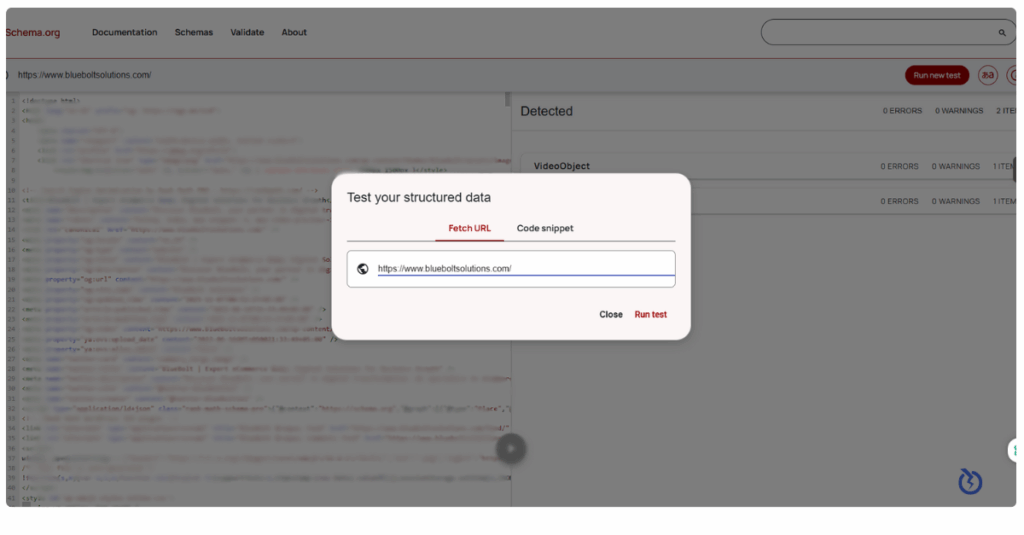
Schema markup isn’t new, but its role in GEO is more targeted than in traditional SEO. The goal isn’t just to help Google parse your page; it’s to give AI crawlers unambiguous signals about who you are, what you do, and why you’re authoritative.
Priority schema types for GEO:
- Organization: name, URL, logo, founding date, social profiles. Establishes entity identity.
- FAQPage: direct Q&A pairs that AI can extract verbatim as answer candidates.
- HowTo: step-by-step content that matches instructional query patterns.
- Article with
author,datePublished, andpublisher: E-E-A-T signals AI models use to evaluate source credibility.
If your structured data isn’t implemented or is inconsistent across pages, AI systems have less confidence in your content, and lower-confidence sources get cited less.
2. Build Content Around the Questions AI Is Already Answering
GEO starts with understanding what’s being asked, not just what you want to rank for. Run the queries your buyers are likely to use in ChatGPT or Perplexity, “best Shopify Plus agency for B2B,” “how to migrate from Magento to BigCommerce,” “what does an ecommerce discovery phase include”, and see what sources get cited. Those are your competitors in AI search.
A 2024 study from Princeton, Georgia Tech, and the Allen Institute for AI (the paper that formally introduced GEO as a discipline) tested nine optimization tactics across 10,000 queries and found that adding citations, statistics, and quotations improved AI visibility by up to 40%. Content that consistently earns citations in practice shares a few structural traits:
- Answer-first format: the direct response appears in the first 1–2 sentences, before supporting detail
- Concise, low-ambiguity language: AI models prefer content that doesn’t require interpretation
- Clear headings: H2/H3 structure that maps to how questions are phrased
- Topic completeness: covering the full question, not just a partial answer
3. Establish Your Brand as a Named Entity
AI platforms reason about entities, brands, people, products, and locations, not just keywords. If your brand name, key personnel, and core services don’t appear consistently across your own site, third-party mentions, and structured data, LLMs will have weak entity signals for you.
Practically, this means:
- Author bios tied to published content (name, title, area of expertise, link to LinkedIn)
- Consistent brand name and service descriptions across your site, press mentions, partner pages, and directories
- Building coverage on platforms LLMs draw from heavily: industry publications, G2/Capterra reviews, LinkedIn, relevant Reddit threads, and Wikipedia if applicable
4. Audit and Control What AI Crawlers Can Access
Many sites are inadvertently blocking AI bots through misconfigured robots.txt files or Cloudflare settings. If AI platforms can’t crawl your pages, they can’t cite them.
Key technical checks:
- Review
robots.txtfor disallow rules that catch AI user agents (GPTBot, PerplexityBot, ClaudeBot, Google-Extended) - Implement or audit your
llms.txtfile — an emerging standard that gives AI models direct guidance on which content is authoritative and how to represent your brand - Confirm that important content is server-rendered, not client-side only, AI crawlers don’t execute JavaScript the way browsers do
- Verify canonical tags are clean, so AI systems don’t fragment your authority across duplicate URLs
5. Monitor What AI Is Actually Saying About You
GEO without measurement is guesswork. BlueBolt’s AI visibility audits assess how your brand currently appears or doesn’t across ChatGPT, Perplexity, Gemini, and Google AI Overviews. That means running structured prompt sets in your category, capturing citation rates, and identifying gaps by topic, competitor, and query type.
What you’re tracking:
- Mention rate: how often your brand appears across a defined set of prompts
- Citation accuracy: whether what AI says about you is correct and current
- Competitive share of voice: who’s getting cited when you’re not, and why
- Sentiment: whether the framing is favorable, neutral, or problematic
Examples of GEO in Action for Businesses
These are the business types where BlueBolt’s GEO work has the most immediate impact:
- eCommerce Stores: By adding structured product data and up-to-date inventories, retailers can have their items highlighted in AI-driven shopping assistants or voice purchase flows.
- Service Providers: Clear service descriptions and FAQs, formatted with schema, help AI chatbots and voice agents recommend your services accurately to potential customers.
- Local Businesses: Consistent map data, reviews, and contact information allow generative engines to provide the right information in local searches or in-car voice systems.
- Content Publishers: Educational websites and blogs that offer open, well-organized content see their articles, guides, or resources cited and summarized in AI-powered learning and discovery platforms.
In each case, the underlying work is the same: structured data, authoritative content, technical AI readiness, and consistent monitoring delivered as part of the BlueBolt GAO program.
The Future of GEO: Trends Businesses Should Watch
GEO is an ongoing practice, and several trends are influencing its future:
- AI platforms are beginning to facilitate purchases, not just answer questions. ChatGPT’s shopping integrations and Perplexity’s commerce features mean the line between “AI cites your brand” and “AI sells your product” is already blurring. For ecommerce businesses, GEO citation authority is becoming a direct revenue channel not just a visibility metric. Brands that are already recognized sources for AI platforms will be the first ones recommended when those platforms begin completing transactions.
- Agentic AI will raise the bar on structured data. As AI agents begin executing tasks autonomously, comparing vendors, shortlisting agencies, and filling out contact forms, they’ll depend even more heavily on clean, machine-readable signals. Businesses with consistent entity data, well-implemented schema, and accessible
llms.txtfiles will be preferred sources for agent-driven decisions. Incomplete or inconsistent structured data won’t just hurt citations — it will exclude you from consideration entirely. - Citation attribution is becoming visible to end users. AI platforms are under increasing pressure to show where their answers come from. As that attribution becomes more prominent in the UI, being a cited source transforms from an invisible influence into a direct brand awareness moment. GEO work done now builds the citation record that will be surfaced to users as transparency standards evolve.
- Share of model becomes a tracked metric like share of voice. Within 12–18 months, AI visibility dashboards will be as standard as SEO rank trackers. Mention rate, citation accuracy, and competitive share of voice across ChatGPT, Perplexity, and Gemini will be reported metrics in every serious marketing review. The brands that have already established baselines through a structured GEO program will have a measurable head start on competitors who are just beginning to audit.
Frequently Asked Questions
What is GEO in digital marketing?
GEO stands for Generative Engine Optimization. It is the practice of structuring your website’s content and technical infrastructure so that AI platforms like ChatGPT, Perplexity, and Gemini cite and recommend your brand in their generated responses.
How is GEO different from SEO?
SEO optimizes for ranking in traditional search engine results pages. GEO optimizes for visibility in AI-generated answers, where there are no rankings only cited sources and omitted ones.
How does GEO fit into BlueBolt’s GAO framework?
GEO is one of three disciplines within BlueBolt’s GAO program, alongside AEO (Answer Engine Optimization) and AIO (AI Optimization). GAO brings all three together into a single managed strategy.
Which AI platforms does GEO target?
The primary platforms BlueBolt optimizes for are ChatGPT, Perplexity, Google Gemini, and Google AI Overviews. As new AI search platforms emerge, the GAO program adapts accordingly.
Conclusion
GEO occupies a specific, critical role in the AI discovery stack: it’s how your brand earns the right to be cited before a potential buyer ever visits your site.
But GEO doesn’t work in isolation. The content authority you build through GEO feeds the answer extraction that AEO depends on. The traffic GEO generates needs AIO to convert. And both are most effective when managed together under a unified GAO strategy with visibility audits, structured implementation, and reporting that connects AI citation signals to actual business outcomes.
The window to establish GEO position is open right now. Most businesses in your space haven’t run a single AI visibility audit. The brands that build citation authority early will be harder to displace as AI search matures — for the same reason early SEO movers still hold organic authority today.
If you want to know where your brand stands in AI-generated answers, that’s where BlueBolt starts.