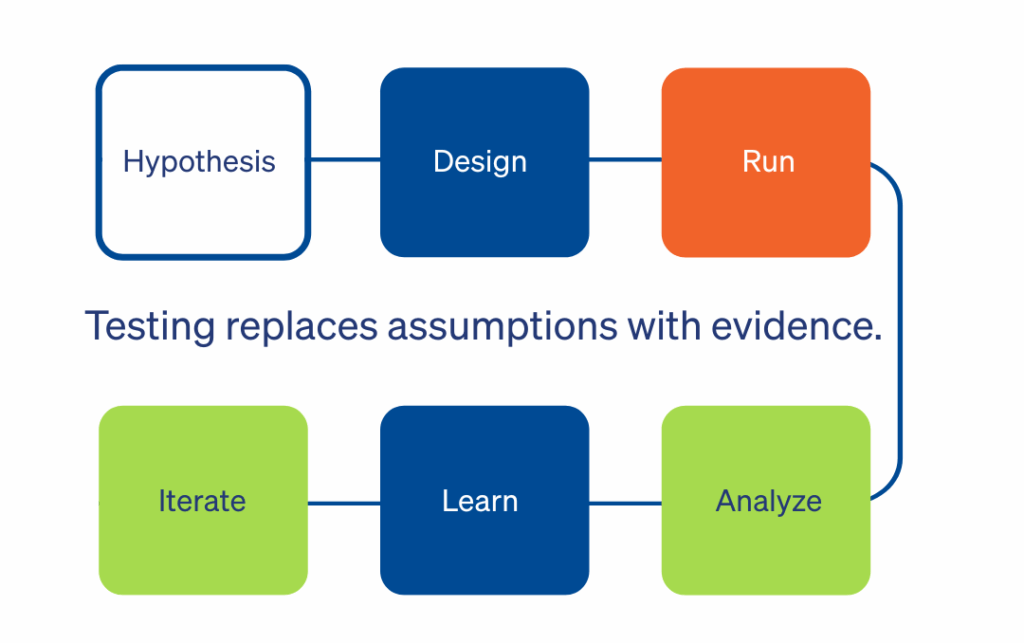
From A/B to ROI: A Guide to Advanced Testing Methods

Honey Olesen

D ata-driven teams have long relied on controlled experiments to guide smarter decisions.

Compare two experiences, measure performance, and declare a winner. Reliable, repeatable, and foundational. But when optimization demands speed and deeper understanding, that playbook starts to feel limited. Is a marginal lift truly a win or just statistical noise? And how confident are you when the stakes are high and time is tight?

That’s where a more sophisticated approach to experimentation becomes necessary. Advanced methods like multivariate and sequential testing, combined with a firm understanding of statistical significance, allow you to move beyond simple comparisons. They help you understand how elements interact, accelerate your learning cycles, and make decisions with calculated confidence. This guide will walk you through these advanced techniques, explain what statistical significance truly means, and show you how to build a more powerful and reliable testing program.

Understanding Statistical Significance

Before diving into advanced methods, it’s crucial to master the concept of statistical significance. It’s the measure of your confidence that a test’s outcome is genuine and not the result of random chance.

The industry standard for confidence is 95%. This means if you were to run the same test 100 times, you would expect the same result in at least 95 of them. It’s your safeguard against acting on false positives.

Statistical significance is determined by three key factors:

  1. Sample Size: The more users in your test, the more stable and reliable the results will be. Small samples can produce misleading swings in data.
  2. Baseline Conversion Rate: A higher starting conversion rate generally requires less traffic to detect a meaningful change.
  3. Minimum Detectable Effect (MDE): This is the smallest improvement you decide is worth measuring. Detecting a massive 30% lift requires far less data than detecting a subtle 1% improvement.

A test is considered complete only when it has run long enough to account for a full business cycle (like a week or two), collected a sufficient number of conversions per variation, and reached your predetermined confidence threshold.

What to Do with Inconclusive Results (e.g., 70% Confidence)

It’s a common scenario: you run a test, and the results come back with only 70% confidence. This doesn’t mean the test was useless, but it does require careful interpretation. A 70% confidence level means there is a 30% chance the observed lift is due to randomness.

Here’s a framework for how to proceed:

  • Consider the Effect Size: Is the reported lift massive or tiny? A 40% lift at 70% confidence is a strong directional signal worth exploring further. A 2% lift is likely just noise.
  • Factor in the Business Stakes: For low-stakes changes like a button color, acting on a 70% confidence level might be acceptable since the risk is minimal. For high-stakes decisions like pricing or core checkout functionality, you should always wait for 90-95% confidence.
  • Iterate or Re-test: Treat an inconclusive result as a learning opportunity. You can either refine the hypothesis and run a new test or roll out the change to a small segment of traffic and monitor its performance closely before a full launch.
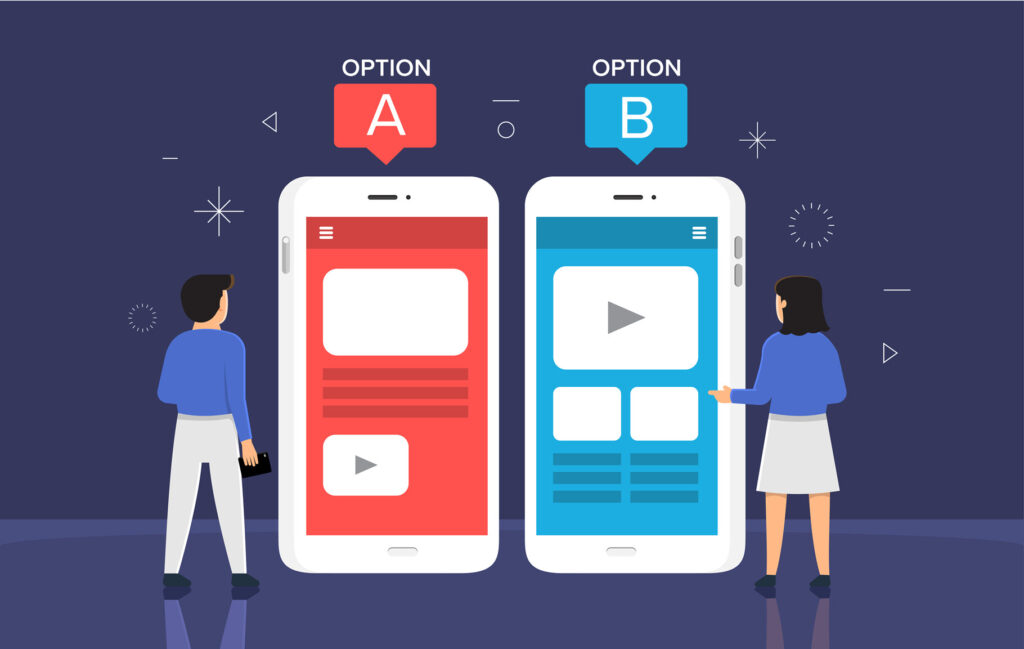
AB Testing  mobile phones

Beyond A/B: Multivariate Testing (MVT)

While A/B testing compares one version against another, multivariate testing (MVT) allows you to test multiple elements and their variations simultaneously. Instead of running separate tests for a headline, an image, and a call-to-action, MVT creates every possible combination and tests them all at once.

For example, you could test:

  • Headline: Headline A vs. Headline B
  • Image: Product Shot vs. Lifestyle Photo
  • CTA Button: “Buy Now” vs. “Learn More”

MVT would automatically create and test all eight combinations (2 headlines x 2 images x 2 CTAs) to find the single best-performing experience.

Benefits of Multivariate Testing

The primary value of MVT is its ability to uncover interaction effects. It moves beyond “what works best?” to answer “what works best together?”. You might discover that your new lifestyle photo only performs well when paired with Headline B, an insight a series of A/B tests would likely miss. This allows for a more holistic optimization of your pages.

Drawbacks and When to Use It

The biggest challenge with MVT is its need for a large sample size. Since each combination needs sufficient traffic to reach statistical significance, MVT is best suited for high-traffic websites, like large retailers or enterprise SaaS companies. For sites with lower traffic, an MVT experiment can take months to produce a reliable result.

Use multivariate testing for:

  • High-traffic environments.
  • Testing interdependent page elements.
  • Major redesigns where multiple components are changing.

team looking at ui ux board

Gaining Speed with Sequential Testing

Sequential testing addresses one of the biggest constraints of traditional experimentation: time. Instead of setting a sample size and waiting weeks for a test to complete, sequential testing allows you to monitor results as data comes in and stop the test early once a clear winner emerges.

Think of it like a race where one runner takes a commanding lead. You don’t need to wait for them to cross the finish line to know they are going to win. Sequential testing applies this logic to experiments, using statistical models to determine when a result is conclusive enough to make a decision.

Benefits of Sequential Testing

The main advantage is speed. By cutting losing variations early, you can redirect traffic to the winning experience faster, minimizing lost conversions. This agility is invaluable for time-sensitive campaigns, such as a Black Friday promotion or a limited-time product launch, where waiting weeks for results is not an option.

Drawbacks and When to Use It

Sequential testing requires strict statistical discipline. “Peeking” at results and stopping a test prematurely without proper methodology can easily lead to false positives. It’s essential to use testing platforms with built-in sequential analysis capabilities to ensure the integrity of your results.

Use sequential testing for:

  • Time-critical campaigns and promotions.
  • Ongoing optimization programs where you want to move through ideas quickly.
  • Situations where you want to minimize exposing users to underperforming variations.

Building a Mature Experimentation Program

A/B testing remains the bedrock of a healthy optimization strategy. It’s perfect for clear, single-variable questions. However, by adding multivariate and sequential testing to your toolkit, you equip your team to answer more complex questions and operate with greater agility.

  • A/B Testing: Your foundation for straightforward, focused experiments.
  • Multivariate Testing: Your tool for understanding interaction effects on high-traffic pages.
  • Sequential Testing: Your accelerator for making fast, confident decisions when time is critical.

The real key to success isn’t just knowing the definitions. It’s developing the expertise to know which method to apply in which context. By balancing statistical rigor with business reality, you can transform your testing program from a simple validation tool into a powerful engine for learning, innovation, and growth.

Need Help?

The Blueprint for AI-Driven Success

Honey Olesen

A rtificial intelligence is reshaping the business landscape, and new terms like AIO, AEO, GEO, and GAO are gaining traction among organizations aiming to leverage AI for meaningful results.

Each concept addresses a different facet of optimization, but when thoughtfully integrated, they form a powerful toolkit for driving business growth, enhancing customer engagement, and staying ahead in a competitive market.

Let’s break down how these four strategies work together to help businesses fully realize the value of AI investments.

Understanding the Four Building Blocks

For businesses looking to harness AI, it’s essential to understand how each of these pillars supports practical goals:

  • AIO (Artificial Intelligence Optimization): AIO focuses on making your AI systems operate more efficiently, faster, and with greater accuracy. This might mean refining an AI-powered personalization engine so it delivers recommendations instantly, or reducing server costs by optimizing model performance. For any business relying on AI—whether for analytics, automation, or direct customer interaction—AIO ensures the technology foundation is robust and reliable.
  • AEO (Answer Engine Optimization): With consumers increasingly searching for direct answers—through search engines or voice assistants—a business’s content needs to be structured to provide those answers quickly and clearly. AEO techniques ensure your website’s information surfaces as a trusted solution in response to customer queries, improving visibility and reducing friction in the buyer’s journey.
  • GEO (Generative Engine Optimization): As generative AI tools become central to information discovery, GEO involves preparing your business’s digital assets to be recognized and used by these advanced engines. By optimizing content, data, and brand signals, you enable generative AI systems to accurately represent your expertise when generating content for users or business customers.
  • GAO (Generative AI Optimization): GAO takes optimization beyond content and search by systematically adopting generative AI to improve products, services, and operations. This could involve using generative AI to streamline support, personalize marketing at scale, or develop entirely new digital offerings, all within a scalable, ethical framework.
business owner working on GAO: AI Strategy

How These Strategies Create Business Value

While each pillar has its strength, the real transformation comes from a unified approach. Let’s see how they work together in practice:

1. Building a High-Performance AI Foundation with AIO

Every AI-driven business starts with robust infrastructure. AIO ensures your AI models—whether powering search, recommendations, or business analytics—deliver results efficiently. With optimized AI, you can scale operations, reduce response times, and limit infrastructure expenses. For example, an e-commerce company can process shopper behavior data in real time, delivering instant, relevant recommendations to boost engagement and sales.

2. Making Your Business Discoverable with GEO

Once your AI foundation is strong, GEO prepares your business to be found and cited by generative AI engines. Optimizing structured data, publishing in-depth resources, and maintaining up-to-date brand information all help ensure that when AI applications generate summaries or answers, your business is included as a reliable expert. This increases your brand’s reach, influences buying decisions, and builds authority with both humans and AI-driven platforms.

3. Becoming the Go-To Source with AEO

Modern customers expect clear, authoritative answers at their fingertips. AEO streamlines your website and content so that when existing or prospective customers have questions, your business provides the solutions directly in featured snippets, FAQs, and voice search responses. This not only attracts more qualified leads but also shortens the path from search to action, driving conversions and customer satisfaction.

4. Turning Capability into Impact with GAO

With a solid AI infrastructure, discoverable expertise, and optimized answers, GAO empowers your business to activate these assets throughout your operation. By embedding generative AI into customer service, marketing automation, or product development, you can personalize interactions, generate tailored proposals, or design new workflows—creating measurable business impact and allowing your organization to adapt rapidly to changing market conditions.

A Practical Example: Unified AI Optimization in Action

Consider a SaaS company adopting a comprehensive AI strategy:

  1. AIO optimizes its recommendation engine and chatbots, enhancing speed and relevance while controlling computational costs.
  2. GEO ensures that detailed product guides and success stories are recognized by generative AI tools, making the company’s expertise visible in synthesized industry insights.
  3. AEO structures onboarding resources, knowledge bases, and service pages for maximum visibility in search and direct answers. Customers find helpful content easily, improving satisfaction and reducing support tickets.
  4. GAO integrates generative AI models to generate custom implementation strategies and support documentation for each client, based on their specific configurations.

The result? Better customer acquisition through increased visibility, greater retention due to responsive support, streamlined internal operations, and scalable marketing and product innovation—all built on a shared, optimized AI backbone.

The Competitive Edge: Why Integration Matters

Businesses that embrace AIO, AEO, GEO, and GAO as a holistic framework experience several key benefits:

  • Faster, Data-Driven Decision Making: Optimized AI supports real-time analytics and actionable insights.
  • Higher Customer Engagement: Discoverability and direct answers meet users’ needs where and when they search.
  • Operational Efficiency: Generative AI unlocks automation and creativity at scale, reducing manual effort.
  • Future-Proof Digital Presence: Being recognized as a trusted authority by both users and AI platforms secures your place in tomorrow’s business landscape.

Taking the Next Step

Adopting this unified strategy doesn’t require an overhaul of your existing operations. Start by evaluating existing AI systems and content for optimization opportunities. Structure your digital assets to answer core customer questions, and focus on becoming a source of knowledge in your industry. Invest incrementally in generative AI capabilities and look for high-impact workflows to transform with GAO.

As businesses accelerate their adoption of AI, those who connect the dots between AIO, AEO, GEO, and GAO will be best positioned to lead. By viewing these four strategies not as isolated buzzwords, but as interconnected pillars supporting practical goals, your organization can drive sustainable growth, foster lasting customer relationships, and thrive in an AI-powered world.

Do You Have an AI Strategy?

What is GAO? How Generative AI Optimization Empowers Businesses

Honey Olesen

B usinesses are having to deal with more and more competition, which forces them to use new technologies to stand out while offering advantages to their online customers.

Among these new ideas, generative AI is changing how websites interact with users, make content, and run behind the scenes. However, generative AI needs to be properly tuned in order to work at its best. Generative AI Optimization (GAO) is the name of this process. Understanding and using GAO can completely change the way website owners and managers do their jobs.

In this post, we’ll discuss how GAO applies to businesses, explore the benefits it brings to online operations and content, and outline practical strategies for leveraging this powerful toolset.

What is Generative AI Optimization (GAO) for Businesses?

Generative AI Optimization refers to a set of strategies and tools aimed at improving the results delivered by AI models that generate content, images, or even code for websites. These models include advanced tools like GPT for text, DALL-E for images, and others that support dynamic, adaptive experiences online.

For businesses, GAO covers the following:

  • Content Customization: Fine-tuning AI models to create content that aligns with your website’s voice, brand, and user expectations.
  • Prompt Engineering: Developing clear, strategic prompts to ensure the AI generates useful and accurate articles, product descriptions, FAQs, or marketing copy.
  • Resource Efficiency: Optimizing AI processes to decrease load times and minimize costs while maintaining high-quality output.
  • Quality Assurance: Continuously improving the authenticity, clarity, and relevance of AI-generated content to maintain website credibility.
  • Personalization: Leveraging AI’s adaptive capabilities to deliver tailored experiences, product recommendations, or customer support automatically.

By focusing on these areas, businesses can ensure that the generative AI powering their digital experiences is not just a novelty, but a driver for measurable improvements.

Why Does GAO Matter for Businesses?

The rapid advancement of generative AI has enabled websites to automate key functions previously handled manually. However, without optimization, these models can underperform; creating generic, off-brand, or even confusing user experiences.

Key benefits of GAO for businesses include:

  • Enhanced Content Quality: Deliver professionally written, error-free articles, product listings, reviews, and help pages automatically, saving time while improving consistency.
  • Improved SEO and Discoverability: Generate search-optimized content that reflects real-time trends and frequently asked questions, helping your website rank higher and attract more visitors.
  • Faster Content Updates: AI models can be optimized to rapidly refresh inventory descriptions, publish topical blog posts, or update support documentation with minimal manual input.
  • Sophisticated Personalization: Offer visitors dynamic, relevant experiences by generating unique landing pages, recommendations, and targeted messages in real time.
  • Operational Efficiency: Free up staff from repetitive tasks, allowing your team to focus on strategy and creative work, all while reducing content production costs.

Practical Applications of GAO in Website Operations

1. Content Creation and Management

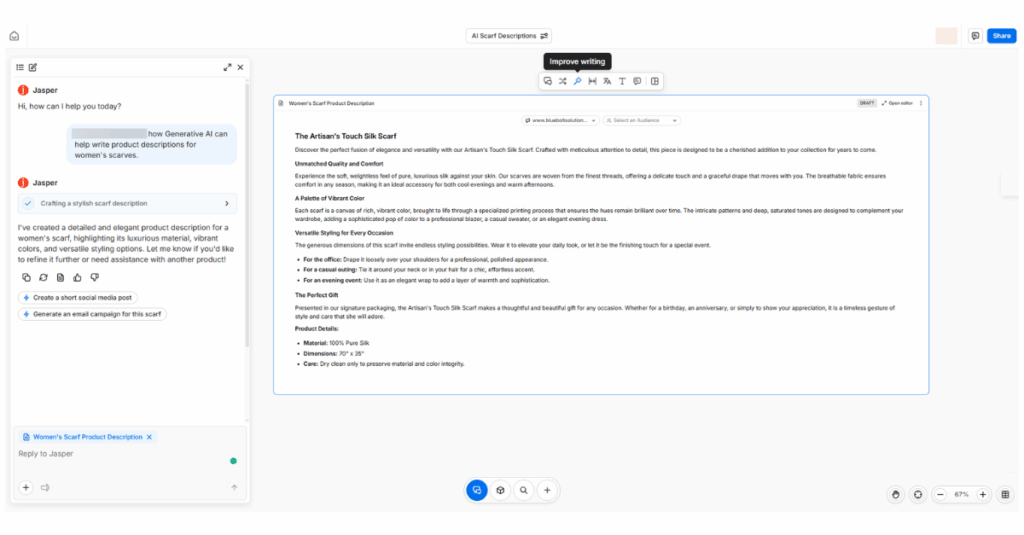
Generative AI can be used to draft and update product descriptions, blog articles, news updates, and more. Through GAO, businesses refine these models so generated content aligns with brand tone, audience preferences, and SEO guidelines.

Example: An eCommerce site leverages GAO-tuned AI to create hundreds of product descriptions that follow branding and highlight top features, increasing conversion rates.

using AI to create product descriptions

2. Automated Customer Support

AI-driven chatbots and virtual assistants are becoming essential for websites. By optimizing generative models for accuracy and empathy, businesses provide immediate, accurate responses to customer inquiries day or night.

Example: A SaaS business uses GAO to ensure its chatbot answers technical queries in plain language and escalates sensitive issues to human agents.

3. Dynamic Website Personalization

Generative AI can produce tailored landing pages, promotional banners, or content modules based on user behavior. GAO ensures the content is relevant, accurate, and on-brand, leading to better engagement and retention.

Example: A travel booking site utilizes GAO to generate custom travel itineraries and suggest experiences based on visitor profiles and current trends.

4. Visual Content Generation

GAO is not restricted to text; image generation models can create site graphics, banners, or ad creatives that are optimized for web use and branded consistency.

Example: A digital publisher employs GAO-optimized AI to design unique, visually consistent article thumbnails, reducing design team workload.

Overcoming Challenges in GAO for Businesses

Like any advanced digital technology, effective GAO comes with obstacles:

  • Maintaining Brand Consistency: AI needs constant tuning and proactive management to ensure it mirrors your website’s standards and voice.
  • Quality Control: Automated testing and human review are required to monitor for errors, inappropriate suggestions, or off-brand content.
  • Efficiency vs. Depth: Striking a balance between rapid automation and delivering nuanced, in-depth website experiences is crucial.
  • Ethical Use: Safeguards must be in place to avoid bias, ensure privacy, and maintain transparency with users about where content is generated.

GAO Best Practices for Website Teams

To make the most of Generative AI Optimization, businesses can focus on:

  • Iterative Training: Continuously gather feedback from users and internal stakeholders to refine prompts and retrain models as needed.
  • Collaborative Workflows: Integrate AI into content teams’ workflows, allowing human editors to review outputs before publishing.
  • Comprehensive Testing: Employ automated QA tools to check for accuracy, SEO alignment, and adherence to guidelines at scale.
  • Ethics and Transparency: Clearly indicate when content is AI-generated and ensure compliance with data privacy standards.
Asia young business woman sit busy at home office desk work code on desktop test IT deep tech ai design skill online html text

Looking Ahead: Future Trends in GAO for Websites

  • Automated GAO Suites: Expect turnkey platforms that automate much of the optimization, making AI adoption easier and more scalable.
  • Multimodal Generative Capabilities: Integration of text, images, and audio generation for immersive website experiences.
  • Hyper-Personalization: Advanced models will tailor every user touchpoint, elevating the user journey and lifting engagement metrics.
  • Eco-Efficiency: Ongoing optimization will focus on reducing AI’s energy footprint in web operations.

Conclusion

To remain competitive and satisfy their audiences, businesses must prioritize generative AI optimization as a core principle. By focusing on enhancing AI outputs, sites can improve their operations, boost user engagement, optimize for search engines, and accelerate content creation. With a strategic approach to GAO, your website can deliver exceptional digital experiences today and seamlessly adapt to emerging AI advancements. If your business is prepared to adopt the next wave of website operations, investing in GAO will pave your way to success.

Need Help With GAO?

What is GEO? Optimize Your Website for AI Search

Honey Olesen

W e all know that the digital world is always changing. As generative AI becomes more popular, the ways people find, interact with, and trust online content are changing.

AI-powered generative engines make content, answer questions, and help people search for things by having conversations. These engines are changing the way people look for information and how businesses talk to their customers. Generative Engine Optimization (GEO) is the best way to make sure your website stays visible, trustworthy, and strong in this new age.

This blog will help businesses understand what GEO means, why it’s critical for your digital presence, how to implement effective strategies, and what trends to watch as AI search becomes the norm.

What is Generative Engine Optimization (GEO)?

Generative Engine Optimization (GEO) is the process of fine-tuning your website’s content, structure, and data so that generative AI platforms (like chatbots, virtual assistants, and advanced search engines) can accurately understand, present, and cite your digital assets. Just as traditional SEO aims to improve rankings in search results, GEO ensures your website becomes a trusted reference point for AI-generated answers, summaries, and recommendations.

For businesses, GEO is about more than keywords and backlinks. It’s about ensuring that generative AI models not only find your site, but also use your information to inform their responses to users, shaping your online reputation and expanding your reach wherever AI is used.

Why GEO Matters for Website Businesses

AI is rapidly changing user expectations and content discovery:

  • Direct Responses Over Click-Throughs: Increasingly, users ask AI tools questions and receive direct answers instead of scrolling through website links. Your website must be structured so generative engines can include your content in those answers.
  • Brand Authority and Trust: AI-generated responses reflect the data they ingest. If your website has accurate, well-structured, and up-to-date content, you position your business as a reliable source, enhancing trust and authority in your space.
  • Cross-Platform Presence: Generative AI powers numerous platforms, from voice-activated speakers to chatbots on ecommerce sites. GEO ensures your site shows up wherever potential customers interact with intelligent systems, not just in traditional search engines.
  • Mitigating Misinformation: Proper GEO practices help prevent generative engines from misrepresenting your business or displaying outdated information, protecting your brand’s online reputation.
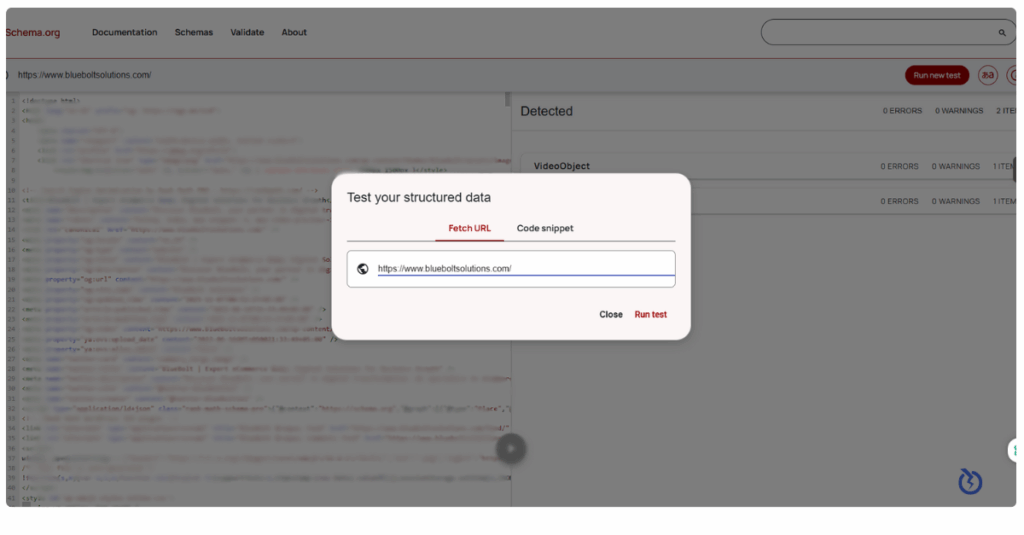
Example of Schema.org url test for GEO

GEO Strategies for Businesses

To make your website stand out in an AI-driven world, consider these GEO best practices:

  • Implement Structured Data and Schema Markup: Use schema to clarify your products, services, reviews, FAQs, and business details to machines. Well-implemented structured data helps generative engines accurately interpret and present your most important content.
  • Maintain High-Quality, Authoritative Content: Create and update content that is thorough, accurate, and references reputable sources. Encourage backlinks and citations from industry peers to reinforce your website’s authority.
  • Consistency Across All Channels: Make sure your business details, messaging, and offerings match wherever you appear online. Consistency helps generative engines connect the dots and reliably reflect your site’s information in their outputs.
  • Write for AI and Human Readers: Answer common questions, provide concise definitions, and organize information logically. Clear, direct language makes it easier for both people and AI models to understand your content.
  • Monitor AI-Generated Mentions: Track how generative engines present your business. Use tools to test prompts and review AI-generated summaries and answers. This feedback helps prioritize content updates or corrections.
  • Optimize for Multiple AI Platforms: Look beyond search engines; ensure your content is discoverable and correctly formatted for chatbots, voice assistants, and other AI-powered interfaces relevant to your users.

Examples of GEO in Action for Businesses

  • eCommerce Stores: By adding structured product data and up-to-date inventories, retailers can have their items highlighted in AI-driven shopping assistants or voice purchase flows.
  • Service Providers: Clear service descriptions and FAQs, formatted with schema, help AI chatbots and voice agents recommend your services accurately to potential customers.
  • Local Businesses: Consistent map data, reviews, and contact information allow generative engines to provide the right information in local searches or in-car voice systems.
  • Content Publishers: Educational websites and blogs that offer open, well-organized content see their articles, guides, or resources cited and summarized in AI-powered learning and discovery platforms.

GEO is an ongoing practice, and several trends are influencing its future:

  • Source Attribution and Transparency: Generative engines are increasingly expected to cite where their responses originate. Websites with clear author info, publication dates, and canonical URLs are more likely to receive proper attribution and benefit from increased traffic.
  • AI-Ready Content Management: Content management systems and web platforms are starting to offer tools specifically for GEO, making it easier for businesses to optimize for various AI engines.
  • Personalization and Context-Awareness: AI models are learning to tailor responses to individual preferences. Businesses that anticipate and address customer needs within their content can improve both AI and user engagement.
  • Continuous Content Audits: As generative models and search interfaces evolve, regularly reviewing and updating your website’s GEO practices will be crucial to maintaining accuracy, visibility, and trust.

Conclusion

Businesses are starting to see Generative Engine Optimization as just as crucial as regular SEO. In the new AI-driven discovery environment, GEO makes sure that the material on your site is properly cited, trusted, and acknowledged. By making your content better, leveraging structured data, and being consistent, you can increase your online presence, serve consumers more, and keep ahead of emerging search and discovery platforms.

When you use GEO, your business can reach users on every AI interface, making your website a leading, reliable source formed by generative engines.

Need Help with GEO?

What is AEO? Optimize Your Website for Search Engines and AI

Honey Olesen

A s the digital landscape rapidly changes, businesses are encountering a new era of search.

Gone are the days when users clicked through a list of website links to find answers. Today, users expect to receive clear, direct answers to their questions instantly, whether in search results or through voice assistants like Alexa and Siri. This evolution presents both a challenge and a significant opportunity for businesses. The solution? Answer Engine Optimization (AEO).

AEO is the discipline of optimizing your website’s content to ensure it becomes the trusted source that search engines and AI-driven platforms feature as direct answers to user questions. For businesses, mastering AEO isn’t just about higher rankings; it’s about ensuring your expertise, products, and services are visible and accessible exactly when people need them most.

What is Answer Engine Optimization (AEO)?

Answer Engine Optimization (AEO) is a strategic approach to structuring and presenting your website’s information so that search engines, virtual assistants, and AI-powered platforms can easily extract and display accurate answers to user queries. Instead of only vying for traditional organic rankings, businesses now need to position their content for inclusion in featured snippets, “People also ask” boxes, and voice search responses.

AEO leverages advances in natural language processing and conversational AI. Search platforms are continuously improving at interpreting questions and discerning which website offers the most authoritative answer. If your website delivers that concise, useful answer, you can earn visibility that was once only possible through paid or top organic listings.

Why Should Businesses Care About AEO?

For businesses, the transition to zero-click searches (where users get their answers directly from the results page) is reshaping digital competition. Here’s why AEO matters:

  • Maximize Visibility in Search: Achieving a featured snippet or a voice search response places your website at the very top, often above even paid ads. This prime placement drives more awareness, even if users don’t always click through.
  • Build Authority and Trust: Being selected as the answer source signals to users (and algorithms) that your business is a trusted expert in your field. This credibility can increase conversions and customer loyalty.
  • Engage Voice-First Audiences: With more searches happening via mobile and smart speakers, concise, well-structured answers tailored to voice interfaces can expand your reach to new segments.
  • Outpace Competitors: In the answer box, the winner truly takes all. Outranking competitors in this space means you become the go-to resource, increasing brand recall and consideration.
laptop screen with deepseek

AEO Strategies Tailored for Businesses

To become the answer that search engines select, consider these proven strategies:

1. Identify and Prioritize High-Value Questions

Use analytics, customer interactions, and tools like Google’s “People also ask” or site search logs to discover the specific questions your customers are asking about your services, industry, or products.

2. Deliver Clear, Concise Answers

Provide direct responses to these questions within your content. Use language that is accessible and includes the relevant keywords naturally. A rule of thumb: keep answers between 40–60 words and make them easy to find within the page.

3. Structure Content for Both Users and Machines

Divide your content into clear headings (H1, H2, H3), use bullet points and numbered lists for step-by-step guidance, and consider summary tables. Implement FAQ and How-To sections, and use schema markup (such as FAQPage and QAPage) to help search engines identify and extract your answers.

4. Optimize for Featured Snippets and Rich Results

Analyze which search features appear for your key terms (paragraph snippets, lists, tables) and match your content format to what is commonly displayed. Providing instruction-based content or clear definitions can increase your chances of being featured.

5. Build Topical Authority

Develop content clusters around your core expertise. Interlink related articles and resources to showcase depth and breadth, making it easy for search engines to see your site as a comprehensive authority on your subject.

6. Prepare for Voice and Conversational Search

Voice assistants often present the single, best answer. Use conversational, natural language in your answers and anticipate the kinds of questions people might ask aloud (“How do I…?”, “What is the best way to…?”).

Key Benefits for Businesses

Embracing AEO unlocks a range of competitive advantages:

  • Prominent Placement Without Paid Ads: Secure top-of-page positions organically, often above traditional search results.
  • Boosted Brand Trust: Consistently being sourced for answers builds a reputation of reliability with both users and search engines.
  • Increased Engagement: Even when users don’t click, being the answer source keeps your website top-of-mind, supporting future visits and conversions.
  • Stronger Support for New Technologies: As AI, voice search, and chatbots become more prevalent, well-optimized answers will surface across diverse touchpoints, not just search engines.

Challenges and How to Address Them

AEO isn’t without hurdles. Businesses should be aware of the following:

  • Zero-Click Implications: Users may get answers without visiting your site. Counter this by using answer boxes to prompt further engagement (e.g., “Learn more about [topic] here…”).
  • High Competition: Only a few sources earn featured spots. Regularly update and refine your content to remain at the forefront.
  • Keeping Content Fresh: Out-of-date answers lose authority; schedule regular content reviews.
  • Technical Implementation: Structured data and page speed improvements may require investment in web development, but the payoff in visibility can be significant.
  • Changing Algorithms: Keep up with SEO and AEO best practices to adapt swiftly when search engines update their answer selection criteria.

The Future: Why AEO is Essential for Website Success

The trend toward answer-driven search is accelerating. With the continued growth of AI-powered search and voice assistants, businesses that invest in AEO today will be poised to capture new traffic sources, strengthen authority, and remain competitive in an evolving landscape.

Looking ahead, we expect answer platforms to integrate more personalization, connect with users across devices and channels, and provide monetization opportunities for top answer providers. Structured, authoritative, and user-focused content will be at the heart of these advancements.

Businesses that prioritize Answer Engine Optimization can not only secure a prominent role in the way users find information but also build stronger, more lasting connections with their audiences. By understanding and implementing AEO strategies, your website can shine as the definitive source—whether in search, voice, or beyond.

Is Your Site AEO Ready?

What is AIO? Optimize Your Website with Artificial Intelligence

Honey Olesen

A rtificial Intelligence Optimization (AIO) is quickly becoming a cornerstone for savvy businesses.

As digital competition grows, websites must not only look appealing but also operate with precision; offering fast load times, tailored user experiences, and data-driven insights that convert visitors into loyal customers. AIO leverages the latest in artificial intelligence to help you refine and automate how your website works, ensuring every element is tuned for peak performance.

In this post, we’ll break down what AIO means for companies, explore its key benefits, and share practical ways to apply AIO to your own site for better performance, happier visitors, and increased conversions.

Defining Artificial Intelligence Optimization for Websites

Artificial Intelligence Optimization (AIO) is the process of using intelligent algorithms to fine-tune and automate vital website functions. Rather than relying solely on manual setups or traditional analytics, AIO makes it possible to continuously test, adapt, and improve elements of your site at scale. Its primary goal? To help your website operate more efficiently: boosting speed, delivering more relevant content, and providing smooth, engaging user journeys.

Think of your website’s recommendation engine, search bar, or personalized landing pages. These are areas where AI can make micro-adjustments; improving what products show up first, which blog posts get recommended, or how content is structured for different users. Through AIO, you can continually optimize these experiences, turning one-time visitors into repeat customers.

How AIO is Transforming Businesses

AIO is already making significant impacts by unlocking new avenues for growth, engagement, and efficiency:

  • Personalized Content Delivery: AI can quickly analyze user behavior and preferences to recommend relevant blog posts, videos, or products. AIO takes this a step further by automatically testing and optimizing which recommendations drive the most engagement or sales, and then implementing changes in real time.
  • Optimized SEO and Search Performance: Website visibility depends on high-quality, search-optimized content. AIO can automate large parts of the SEO process, such as keyword analysis, creating schema markup, and refining meta descriptions, ensuring that your pages consistently rank higher in search results with less manual effort.
  • Conversion Rate Optimization (CRO): From A/B testing call-to-action buttons to personalizing homepage layouts by user segment, AIO streamlines traditional CRO tactics. AI-powered platforms can simultaneously test hundreds of variations and automatically adjust to the layouts or offers that drive the best results.
  • Faster Load Times and Technical Performance: AIO tools can monitor site speed and automatically compress images, adjust scripts, or recommend optimizations. These improvements not only enhance user experience but can also positively affect SEO rankings.

Key Benefits and Use Cases of AIO for Websites

Businesses adopting AIO often see measurable gains across multiple dimensions:

  • Enhanced User Experience: Deliver content, products, and layouts that are most relevant for each individual visitor. With AIO-driven personalization, websites feel more engaging and intuitive, reducing bounce rates and increasing time on site.
  • Increased Conversions and Revenue: By optimizing every step of the user journey, from navigation to checkout, AIO helps convert more visitors. Whether you run an eCommerce shop or provide digital services, AIO can uncover the subtle changes that lead to more sales.
  • Operational Efficiency: Reduce the manual work in tasks like SEO updates, content recommendations, or A/B testing. Your marketing and development teams gain more time to focus on strategy and growth.

  • Real-Time Adaptation: Website trends can shift rapidly. With AIO, your site can learn and respond to new user behaviors on the fly, adapting content, offers, or experiences as needed.

Practical Applications:

  • Automated Product or Content Recommendations: Use AI to continually refine which products or articles show up for each visitor, increasing the likelihood of clicks and purchases.
  • Dynamic Page Optimization: Automatically test different page layouts, color schemes, or headlines to discover which combinations drive the most engagement then implement those changes instantly.
  • SEO Content Strategy: Let AIO analyze search trends and recommend new content ideas, update existing posts for better ranking, and identify underperforming pages needing attention.
  • Predictive Customer Service: Power chatbots or support widgets that quickly answer visitor questions or resolve issues, improving satisfaction and freeing up staff for complex cases.

Challenges and Considerations

While the promise of AIO is significant, it’s important for businesses to be mindful of a few challenges:

  • Computational Resources: AI model optimization, especially at scale, can require significant computing power and data volume.
  • Complexity and Oversight: Fully automated changes should still be overseen by your team to maintain brand voice and ensure changes align with your business goals.
  • Data Privacy and Ethics: When using visitor data for personalization, ensure you’re up to date with privacy regulations and that your AI systems are transparent and fair in their recommendations.
super computers

The Future of AIO in Website Optimization

As artificial intelligence continues to advance, so will the ways it optimizes websites. Future AIO systems are expected to become even more “intelligent”; automatically adjusting for seasonality, user trends, device types, and more. We’ll see a greater focus on explainability (understanding why a certain change was made), making it easier for website teams to trust and adopt AIO-driven recommendations.

Additionally, with advances in low-code and no-code platforms, even smaller website operators will be able to harness the benefits of AIO, democratizing access to powerful optimization tools previously reserved for large enterprises.

Getting Started with AIO

Integrating AIO into your business doesn’t have to be daunting. Start with a clear goal (such as improving homepage engagement or reducing checkout drop-off) and choose an AI-powered optimization tool that aligns with your needs. Monitor the impact closely, provide human feedback, and expand AIO’s role as your website’s needs and ambitions grow.

By embracing Artificial Intelligence Optimization, you position your website not just to keep up with the competition, but to lead the way in providing fast, engaging, and conversion-optimized digital experiences.

Check back next week where we explain what Answer Engine Optimization (AEO) is and how businesses benefit from it.

Are you AIO Ready?

Is Your MarTech Stack Secure? 2025 Cyber Threats to Know

Honey Olesen

I f you’ve ever shaken hands with your marketing stack, those tools are powering CRM, email automation, ad-serving, analytics, and so on.

You should know: you weren’t just forming a business alliance, you were hosting a potential front porch for cybercriminals. That’s the core idea behind the article from MarTech Cube, titled How MarTech Platforms Are Becoming Prime Targets for Cyberattacks. Let’s unpack what they mean — and then add some up-to-date intelligence on what’s changed, what’s new, and what you (yes, you, the marketing person) should care about.

What the original article highlighted

Some of the key points:

  • MarTech stacks now hold tons of data — customer profiles, campaign behaviour, segmentations, attribution data — making them lucrative targets.
  • The boundaries between “marketing tech” and “IT/security tech” are blurring; tools once seen as benign (emails, landing pages) now have access to business-critical flow and data.
  • A breach in a MarTech component can have ripple effects, including damage to brand trust, regulatory exposure, and partner mandates.
  • The advice: treat MarTech like any other infrastructure—secure it, govern it, limit access, monitor activity.

In simpler terms: Just because it says “marketing platform” doesn’t mean it’s exempt from “cyber-attack target”.

What’s new in 2025–2026: The evolution of the threat

1. AI-powered attacks are live

Hackers aren’t just using “spray and pray” phishing anymore. They’re leveraging AI and generative tools to craft extremely convincing spear-phishing, deepfakes, and even automated infiltration. For example, research from TechRadar shows ~80% of ransomware attacks in recent datasets are now powered by AI.

What this means for MarTech: if you run campaign systems that send mass emails or automated sequences, imagine an AI-crafted “internal” email letting an attacker in. That’s a real risk.

2. The attack surface has exploded

With remote work, cloud services, third-party plugins, and more marketing integrations, your MarTech stack isn’t just a standalone piece; it’s woven deeply into business systems. The CompTIA 2025 “State of Cybersecurity” report shows firms are improving, but the attack surface is still expanding.

For marketing pros: every new integration (CRM, ad-network, webinar tech, analytics) is a new possible entry point.

3. Zero-trust is no longer optional

The old “walled perimeter” model is gone. The concept of ʻnever trust, always verify’ (aka Zero Trust) is becoming standard across IT and security.

In marketing terms, you might need to rethink things like: “Anyone on this team can access all campaign data.” Up the access controls. Authenticate. Monitor.

4. Supply-chain & third-party MarTech vulnerabilities

Whether it’s a plugin for your email platform, an ad-network script, or a third-party analytics SDK, each one is a potential point of compromise. Because attackers love to exploit the weakest link (often a vendor).

Marketer takeaway: vet your vendor security practices. Don’t just license a tool because “it’s cool”.

5. Regulation, brand-trust, and business risk intersect

Beyond the tech lens, breaches now hit marketing in a big way: bad press, customer churn, compliance fines (if PII is involved). The MarTech Cube article referenced this “trust vault” idea — one breach or one misfired email could undo years of brand building.

So marketing people, you’re not off the hook. You’re on the front lines of messaging, but also potential victims of poor tech hygiene.

What marketers (yes, you) should do

So we’ve got threats. But we’re also marketers. Here’s a practical toolkit for you to steer your MarTech stack toward safer waters.

Audit your stack

  • Map out all your tools: CRM, automation systems, analytics, plugins, ad-tech.
  • For each: who has access? What data lives here? Who are the vendors?
  • Identify integrations with other business systems (e.g., HR, finance, IT) they may widen the attack surface.

Enforce strong controls

  • Apply the principle of least privilege: only the people who need access get it.
  • Use multi-factor authentication (MFA) everywhere.
  • Monitor access logs: marketing tech isn’t “just safe”.
  • Demand vendor security disclosures: what practices do they follow, how often do they patch, what’s their incident response plan?

Collaborate with IT/security

  • Make the security team your friend (or at least your ally).
  • Participate in incident-response tabletop exercises. “What if our email system is breached midday on Black Friday?”
  • Ensure marketing has representation in business-risk discussions (not just “cool campaign” discussions).

Communicate trust to your audience

  • Use marketing channels to highlight that you take security seriously (without being cheesy).
  • Publish basic assurances (e.g., “We use industry-standard encryption … your data is safe”), including relevant certifications if available.
  • If your platform or stack is down due to a breach — communicate early, transparently, but with confidence. Taking ownership helps mitigate brand damage more effectively.

Stay ahead of the curve

  • Keep an eye on new threats. For example, attacks by autonomous AI, new ways to phish, and breaches in the supply chain.
  • Put money into training: marketing teams aren’t safe; social engineering often starts with an email that looks like it’s from a marketing team.
  • Think about this: “What if the hacker sends phishing emails using our brand voice?” It could happen.

The bottom line

Your MarTech stack isn’t just a “marketing tool.” It’s part of your business infrastructure and like all infrastructure, it needs to be defended, monitored, audited, and governed.

You may love writing campaigns, analyzing data, and optimizing conversions (who doesn’t?). But the safer your stack, the better your marketing game can run without unexpected “uh-oh” moments.

Think of your MarTech ecosystem like a trendy coffee shop: great beans, cool interior, lots of customers… but if you forget to lock the back door, the place becomes a target in the middle of the night. Secure the door, and your customers will come back day after day. Lock it badly, and you’re cleaning up after an incident rather than brewing espresso.

Let’s Fortify Your MarTech Together

Mistakes People Make When A/B Testing and How to Avoid Them

Aaron Shapiro

A great way to make decisions based on data in through A/B Testing. It gives you proof instead of speculation, so you can find out what your customers really want.

But it’s not as easy as just creating two versions of a webpage and waiting for a winner to perform a reliable test. If you commit a lot of typical A/B testing mistakes, your results could not be genuine, which could cause you to make bad business decisions based on bad data.

The first step to making a good experimentation program is to know about these problems. A well-done test gives clear, useful information, whereas a poorly done test causes confusion and wastes precious resources.

This tutorial lists the most common mistakes people make when doing A/B tests and gives clear, concrete ways to avoid them. We will give you the tools you need to execute experiments that give you accurate results and help your business develop.

1. Testing Without a Reason

When you run studies without a specific hypothesis, you often get random, inconclusive findings. It’s easy to get caught up in testing things on a whim, like starting a fresh headline just to “see what happens,” but this method doesn’t usually give you useful information.

What causes it: Being eager to get better outcomes or feeling like you have to “just test something” can get in the way of strategic planning.

Why it’s wrong: You can’t tell if something succeeded (or didn’t) or quantify success without a clear hypothesis.

What to do to remedy it:

  • Always start with a precise, testable hypothesis, like “We think that changing X will make Y go up because of Z.”  
  • Make sure your tests have a goal, not just a notion for the sake of doing something.
  • Write down your hypothesis in your pre-launch checklist so that it is clear and in line with the rest of your work.

2. Not Getting a Statistically Significant Result

One of the worst things you can do during A/B testing is end the test as soon as one version appears like it might be ahead. Early trends can be deceiving, and if you don’t have enough data, your “winner” could not be real.

Why it happens: Teams may be tempted to end experiments too soon because they are excited about the early results and feel pressure to proceed swiftly.

Why it’s wrong: A sample size or length that is too small makes conclusions that are not accurate and raises the chance of getting false positives or negatives.

How to correct it:

  • Before you start your test, figure out how many samples you need and keep to that number.
  • To account for changes from day to day and week to week, set a minimum test length, like one or two full business cycles.
  • Before you make any conclusions, use your post-launch checklist to make sure the results are statistically significant (usually 95% confidence or greater).

3. Trying to test too many things at once

If you modify more than one thing in a single test, such as headlines, graphics, and CTAs, you can’t tell which modification produced the outcome.

Why it happens: People who want to get the most out of their learning or group updates may make assessments too hard.

Why it’s wrong: Testing more than one variable makes it harder to see clearly what has to be done to improve performance.

How to repair it:

  • When you can, just alter one variable at a time.
  • If you need to test more than one thing, think about using a structured multivariate test (MVT) and make sure you have enough traffic.
  • For the sake of transparency, write out exactly what is changing in your pre-launch checklist.

4. Not paying attention to differences between segments

A general outcome can hide how distinct groups of users react. Desktop users might be doing well, while mobile users might not be, or new visitors might act differently than returning consumers.

Why it happens: When you’re short on time, it’s best to merely look at the big picture.

Why it’s a bad idea: If you don’t have segment-specific knowledge, you can make adjustments that help some consumers but hurt others.

How to repair it:

  • Decide ahead of time which user groups (by device, new vs. returning, geographical) you will look at.
  • After the test, look at the findings by segment to find differences or trade-offs.
  • Add segmentation analysis to your list of things to do after the test.
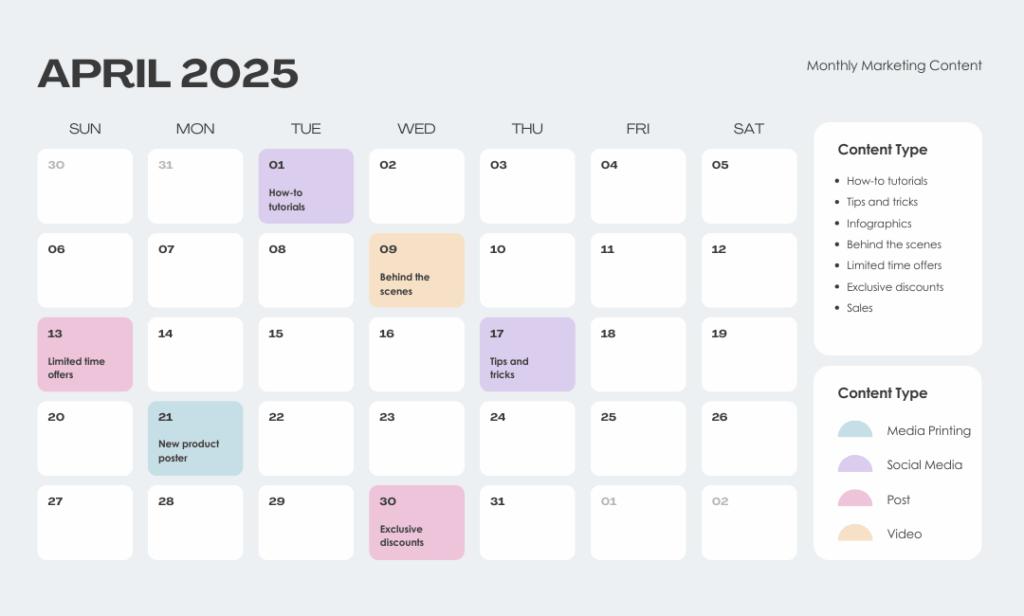
marketing calendar

5. Ignoring Outside Factors

Tests done during holidays, sales, or abrupt traffic spikes can give results that won’t happen again in normal conditions.

Why it happens: Sometimes, tests are started without taking into account the big picture of the marketing calendar or strange circumstances.

Why it’s wrong: Outside variables might change how people perform, which can lead to wrong results.

How to fix it:

  • Before scheduling tests, look for large campaigns, promotions, or events that are out of the ordinary.
  • Write down anything strange that happens during your test and use that information in your analysis or even think about doing the test again.
  • Add a phase to your pre-launch checklist to look over events that are coming up outside of your business.

6. Not writing down and sharing results

When test results and lessons learned aren’t recorded and shared, the institution loses vital knowledge. Teams keep making the same mistakes or losing chances to build on what they’ve learned in the past.

Why it happens: Teams move quickly and think about “what’s next” instead of what they’ve done.

Why it’s wrong: Not keeping track of results makes it harder for organizations to learn and slows down their efforts to improve in the future.

What to do to remedy it:

  • Make a simple template to write down your hypothesis, the changes you tested, the findings, the statistical significance, and what you learned.
  • Keep results in a place where the whole team can search and get to.
  • Make sure to include documentation on your post-launch checklist.

7. Seeing testing as a one-time project

Long-term growth is hurt when people see A/B testing as a one-time event instead of an ongoing process.

What causes it: After a few tests, teams could decide that experimentation isn’t as important and only do it again when things go wrong.

Why it’s wrong: To keep making progress, learn new things, and adjust to how customers act, experimentation should never stop.

How to make it better:

  • Make A/B testing a regular part of your job and set up regular test cycles.
  • Keep an eye on how things are doing over time and check for trends across different experiments.
  • Make testing and learning a regular part of your marketing strategy.
decorative image of graphs and tables

7. Making assumptions based on small increase

Just because you have a greater conversion rate doesn’t guarantee you have a winner. To be reliable, the difference that was seen must be statistically significant.

What causes it to happen: Teams look at the raw conversion rates of each variation and choose the one with the greater number as the winner, not taking chance into account.

Why it’s wrong: You can’t be sure that the result is legitimate if A/B testing don’t show statistical significance. You are making a business decision based on a coin flip.

What to do to remedy it:

  • Set a minimum level of confidence before you start (95% is the industry norm).
  • Don’t say who won until your testing tool says the result is statistically significant at the level you set. If the results aren’t significant, treat them as inconclusive.

Checklists for A/B Testing Best Practices

List of Things to Do Before Launch

  • Is the test hypothesis well-defined and recorded?
  • Is the hypothesis easy to understand and test?
  • Are you only changing one thing, or is your design set up to make it clear how different things work together?
  • Is your main metric linked to an important company goal?
  • Have you figured out how many samples you need and how long the test should last?
  • Has the test been checked for quality on all major browsers and devices?
  • Is QA done and analytics tracking checked for all versions?

Checklist After the Test

  • Did the test go as long and have as many people as planned?
  • Has statistical significance (95% confidence or greater) been reached and checked?
  • Were the results for each segment (device, new/returning) looked at for differences?
  • Were there any mistakes in tracking or outside events that could have changed the data?
  • Have you written down and communicated the results, insights, and next steps with your team?

Common Questions (FAQ)

How long should I keep testing?

Your test should be long enough to get your sample size and span at least one full business cycle (seven days). Most organizations can trust that doing a test for 14 days will give them good results because it smooths out daily changes and shows how various users act.

Is it ever permissible to use a confidence level that is lower than 85% or 90%?

There is a reason why 95% is the standard, but for low-risk decisions, a lower confidence level may be fine. If you are evaluating a tiny modification where the risk of being incorrect is relatively minimal, an 85% confidence level could provide a useful directional suggestion.  Always ask for 95% confidence or higher for any test that will have a big effect, like a redesign of the checkout sequence.

What should I do if my test results don’t provide me a clear answer?

A result that is not statistically significant is not a failure. It’s a chance to learn. It notifies you that the modification you made wasn’t big enough to influence how people use the site. This could suggest that your theory was erroneous or that you didn’t do it well enough. Use this information to come up with a new, bolder idea for your next test.

Conclusion

To create a culture of experimentation that gets genuine results, you need to stay away from these frequent A/B testing mistakes. If you want to go over the basics again, our CRO Statistics Foundations tutorial can help you remember the statistical ideas that make testing reliable.

Need More Assistance

A Practical Guide to Statistics for Marketers

Aaron Shapiro

Y ou don’t need an advanced degree to make data-driven marketing decisions.

However, a basic grasp of statistics is essential for correctly interpreting campaign results, understanding A/B tests, and drawing reliable conclusions from your analytics. Without it, you risk acting on misleading data, cutting a winning test short, or investing in a strategy that only appeared to work by random chance.

This can lead to costly errors. You might scale a campaign that wasn’t truly effective or claim a victory that was just statistical noise. The good news is that a few core concepts are all you need to avoid these common traps.

This guide is your practical introduction to statistics for marketers. We will cover the essential concepts you need to run smarter, more effective campaigns—no complex equations, just straightforward explanations to help you build confidence in your data.

What We’ll Cover:

  • Why sample size in marketing tests is critical
  • Understanding confidence levels in A/B testing
  • The difference between a real result and random noise
  • How to interpret p-values without the jargon
  • Avoiding the correlation vs. causation trap
  • Why averages can sometimes hide the truth

1. Sample Size: Why More Data Leads to More Trust

One of the most frequent mistakes in marketing analytics is drawing conclusions from a small data set. When your sample size is too low, random fluctuations can create extreme results that aren’t sustainable or real.

Imagine you launch a new ad campaign. On the first day, ten people click through, and four make a purchase. That’s a 40% conversion rate. While impressive, it’s highly unlikely that four out of every ten people will convert. The sample is just too small to be reliable.

As you gather more data, the numbers will almost always regress toward a more realistic, stable average. After collecting 2,000 clicks, you might find that 80 people converted. Your conversion rate is now 4%, a far more accurate and trustworthy metric for forecasting.

Key takeaway: Avoid making decisions until you have collected enough data to minimize the impact of randomness. Dramatic swings in performance with small samples are common and often misleading. For A/B testing, a general rule is to aim for at least a few hundred conversions per variation to ensure your results have a stable foundation.

2. Confidence Levels and Statistical Significance Explained

These two concepts work together to tell you if your A/B test results are dependable. They act as a filter, helping you separate a true change in user behavior from random chance.

Confidence Levels in A/B Testing Explained

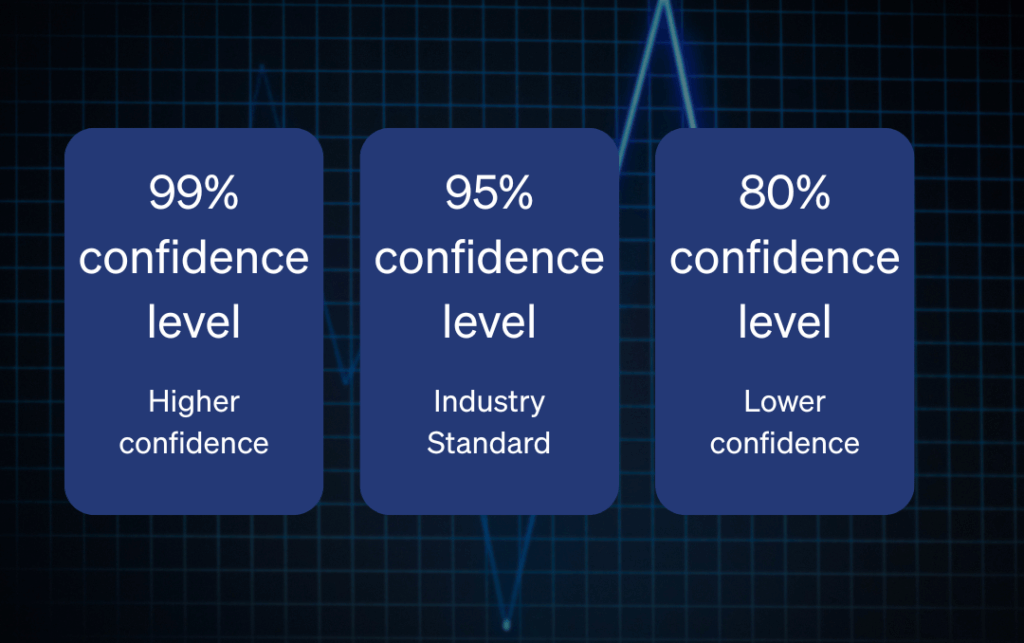
A confidence level tells you how certain you can be that your results are not a fluke. In marketing and web optimization, a 95% confidence level is the industry standard. This means if you were to run the same test 100 times, you would see the same winning result in at least 95 of those tests. The remaining 5% represents the risk that your outcome was due to random luck.

  • Higher confidence (e.g., 99%) provides stronger proof but requires more traffic and time.
  • Lower confidence (e.g., 80-90%) can offer directional insights but carries a higher risk of being wrong.

Think of it like a weather forecast. A 95% chance of rain means you should definitely bring an umbrella. An 80% chance means you still might, but you accept a greater possibility of staying dry.

Confidence Levels

What is Statistical Significance?

Significance is the direct output of your confidence level. If your test result reaches a 95% confidence level, it is considered “statistically significant.”

Let’s say you test a new checkout button. Version A (the original) has a 10% conversion rate, and Version B (the new design) has an 11% rate. Is that 1% lift a real improvement, or is it just statistical noise? Significance testing answers that question. If the result is not statistically significant, you cannot confidently declare Version B a winner, even if its conversion rate is higher.

Key takeaway: Always test until you reach your predetermined confidence level, typically 95%. Acting on non-significant results is equivalent to making a decision based on a coin flip.

3. P-Values: A Simple Definition

The p-value is another misunderstood metric, but its purpose is quite simple. The p-value measures the probability that the results you observed were purely due to random chance.

In short, it’s the probability of a fluke.

  • A p-value of less than 0.05 (p < 0.05) is the standard for significance. It means there is less than a 5% chance that your result is random noise. This corresponds directly to a 95% confidence level.
  • A smaller p-value means stronger evidence. A p-value of 0.01 suggests only a 1% chance that the outcome was random.

It’s important to know what a p-value is not. It doesn’t tell you the probability that your winning variation is the “true” winner or how big the uplift is. It only quantifies the likelihood that random chance created the observed difference.

4. Correlation vs. Causation: A Critical Distinction

It’s easy to assume that when two things happen at the same time, one must have caused the other. This is the classic trap of confusing correlation with causation.

  • Correlation: Two variables move in the same direction. For example, ice cream sales and sunglass sales both increase during the summer. They are correlated.
  • Causation: One event directly causes another. However, buying sunglasses doesn’t cause people to eat ice cream. The hidden factor is the warm weather, which causes both.

In a marketing context, you might see that revenue increased after you launched a new feature on your website. Did the feature cause the revenue lift? Not necessarily. Perhaps a major holiday occurred, a competitor went offline, or you were featured in a news article.

The only reliable way to prove causation is with a controlled experiment (like an A/B test), where you show the new feature to one group and not to another, keeping all other conditions the same.

5. Beyond Averages: Finding the Real Story in Your Data

The average is a useful starting point, but it can often hide important details. Relying solely on averages can lead to flawed strategies because they smooth over the nuances in customer behavior.

For example, imagine your site’s average order value (AOV) is $120. This could mean most customers spend around $120. Or, it could mean half your customers spend $40 while the other half spend $200. These two scenarios tell very different stories and call for different marketing actions. The first suggests a uniform customer base, while the second indicates distinct segments of low and high spenders.

To get the full picture, look beyond the average. Use tools like medians, distributions, and customer segments to understand your data more deeply. You may discover that new customers have a much lower AOV than returning ones, an insight that would be completely hidden by a single average.

A Marketer’s Quick Guide to Statistical Thinking

Mastering these basic statistics concepts for marketing will make you a stronger, more confident decision-maker. It’s not about becoming a statistician—it’s about reducing risk and replacing assumptions with evidence.

By building a culture of testing, you empower your team to learn faster and make smarter investments. Every test, even an inconclusive one, provides valuable information about your customers.

Frequently Asked Questions (FAQ)

1. How long should I run an A/B test?
A test should run long enough to collect a sufficient sample size and account for natural business cycles. A common mistake is stopping a test as soon as it reaches significance. Best practice is to run tests for full weekly cycles (e.g., 7, 14, or 21 days) to capture variations in user behavior between weekdays and weekends.

2. Is an 80% or 90% confidence level ever acceptable?
While 95% is the standard, a lower confidence level can be acceptable for low-risk decisions. For example, if you are testing a minor headline change where the cost of being wrong is minimal, an 85% confidence level might be enough to provide a directional signal. For high-stakes decisions, like a checkout redesign, you should always aim for 95% or higher.

3. What if my test result is inconclusive?
An inconclusive result—one that doesn’t reach statistical significance—is a learning opportunity. It tells you that the change you made was not impactful enough to create a detectable difference in user behavior. This might mean your hypothesis was incorrect or the change was too subtle. Use this outcome to iterate on your hypothesis and design a bolder test.

Request a Consultation

The Future of SEO: What eCommerce Marketers Must Master in Late 2025

Honey Olesen

I n the dynamic world of eCommerce, where algorithms can pivot overnight and new technologies rewrite the rules, staying ahead is non-negotiable.

Several agencies and experts have weighed in on the most important SEO trends for 2025. Let’s dive into them and analyze how they matter to online stores gearing up for the second half of the year.

Local SEO 2.0: Beyond Proximity to Real Engagement

Original insight Google’s local algorithm now prioritizes proximity, relevance, and real-world engagement, making your Google Business Profile (GBP) more vital than ever.

eCommerce spin Even fully online brands can harness this. Consider these strategies:

  • Hybrid fulfillment hubs: Highlight your nearest warehouses or fulfillment centers on GBP—trust and delivery transparency matter.
  • Local reviews on region-specific landing pages: “Fast shipping to Phoenix” or “Same‑day pickup in Scottsdale” could become your new power phrases.
  • Geo-targeted FAQs: “Do you ship to Sedona?” Answer directly on pages that Google surfaces for “near me” queries.

In an industry that is usually dominated by brick-and-mortar stores, you can gain traction by including proximity into your copy, user experience, and local landing pages.

Voice & Conversational Search: Speak Your Customer’s Language

Original insight Voice search and long-tail, conversational queries are on the rise, with users expecting “quick, clear answers”.

eCommerce spin Your product pages should practically talk back:

  • Structure descriptions like natural dialogue: “What makes Shirt X durable?” then answer with detail.
  • Add FAQ sections using conversational Q&A: “Does this jacket come in plus sizes?” → “Yes—we offer plus sizes 1X to 3X with free returns.”
  • Optimize for voice commerce by implementing schema markup and ensuring a mobile-friendly layout for smart speakers and voice assistants.

Users asking Alexa or Siri for “lightweight running shoes under $100” should surface your product swiftly and convert without scrolling.

person speaking into mobile phone

Refreshing Old Content: SEO’s Gold Mine

Original insight Google rewards recently updated content, especially if it already garners traffic or sits on Page 2.

eCommerce spin Here’s why updating beats reinventing:

  • Revamp your best-selling product guides every quarter with fresh data, new images, and clarified CTAs (“Buy now,” “Free shipping today”).
  • Update review roundups (“Top 10 summer dresses”) with current inventory and changing trends.
  • Don’t forget internal linking—connect refreshed content to new arrivals, related items, or seasonal collections to pass link equity and boost engagement.

A 20-minute rewrite isn’t just efficient—it’s SEO strategy disguised as productivity.

AI Content Detection & Authenticity: Quality Still Counts

Original insight AI-generated content isn’t penalized—but guess what? Neither is bad AI-generated content. Google still privileges value, originality, and human voice.

eCommerce spin AI can help—but you’re the secret sauce:

  • Use AI to generate initial drafts: product snippets, filters, email previews. Then polish with your brand voice, storytelling flair, or user anecdotes.
  • Add exclusive elements—customer photos, usage stats, short video demos—to break the machine mold.
  • Focus on depth, not fluff—long-form guides like “Choosing the ideal mattress firmness for your sleep style” attract both search bots and sleep-deprived shoppers.

Blend human warmth, unique angles, and a conversational voice to stand out—because generic just doesn’t convert.

Topic Clusters & Topical Authority: Be the Go-To Brand

Insight from other sources Building topic clusters and establishing topical authority—covering all subtopics around a core theme—are essential in 2025.

eCommerce spin Product pages shy away from depth. Enter interactive cluster hubs:

  • For example, “Running Shoes” should have its own pillar page. Links to subtopics such as “Best lightweight shoes,” “Cushioning explained,” and “Choosing by arch type” should be included. To share authority and enhance user experience, include internal links between these finance-level guidelines and product pages.
  • Leverage UGC—product reviews, FAQs, how customers use the items—which supports SEO and builds trust.

Become the Wikipedia of your niche—go deep, stay organized, stay credible.

Answer Engines & GEO/AEO: Optimize for AI Overviews

New trend from external sources AI-powered answer engines (e.g., ChatGPT, Google’s SGE) are reshaping search. Brands need Answer Engine Optimization (AEO) and Generative Engine Optimization (GEO) to stay visible.

eCommerce spin Think zero-click answers:

  • Include a “Quick Facts” box on product pages—short lines like “Ships in 24h,” “Made in USA,” “Waterproof to 50m.”
  • Use schema markup (product, FAQ, reviews) so AI can scrape and present your info seamlessly.
  • Create Q&A content hubs: “How long does delivery take?” or “What’s the warranty on mattress X?”—tailored for AEO.

AI bots love clean, structured data—make it easy, make it clickable.

person in white at a desk using a laptop to search

Brand Search Volume & Diversified Traffic Sources

Insight from another expert source Google increasingly values brand-specific queries as a sign of trustworthiness. Don’t rely solely on organic search—broaden your traffic streams.

eCommerce spin Grow your brand presence everywhere:

  • Email & social marketing that promote content and products—send reminders for abandoned carts, guide prospects to updated content.
  • Appear in podcasts, YouTube reviews, influencer collaborations—each mention boosts brand search and credibility.
  • Run paid ads to promote cornerstone content (“How to choose the perfect yoga mat”); even low-cost PPC retains users and aids rankings.

A holistic traffic strategy is the SEO safety net every store needs.

zero waste

UX, Core Web Vitals & Mobile-First: Speed Sells

Supporting sources Core Web Vitals and mobile-first design remain crucial ranking factors.

eCommerce spin One sluggish page = lost money:

  • Compress images and lazy-load to reduce load times on mobile.
  • Simplify navigation: large “Buy Now” buttons, minimal pop-ups, and auto-complete forms.
  • Ensure your checkout works flawlessly on small screens—glitch-free purchase flow earns both $ and search love.

Friction kills conversions—but your SEO will smirk when UX improves.

Video & Visual Optimization: See and Sell

From multiple sources Video—whether YouTube, embedded clips, or visual search—is still picking up steam.

eCommerce spin Product pages with video convert better:

  • Add short “how it works” videos, unboxings, or 360° rotating footage.
  • Embed on-page tutorials: “How to assemble this camping tent.”
  • Tag visuals properly: alt-text for images (“red leather boot, durable sole”) and transcripts for videos—enhancing both accessibility and SEO.

Bonus: Visual search optimization—user uploads a pic, your product emerges. It’s not sci-fi. It’s SEO.

Sustainability & Ethical SEO: A New Trust Metric

From external trends Highlighting sustainability and ethical practices can boost SEO performance.

eCommerce spin Eco-friendly or ethical credentials should be integrated, not buried:

  • Add sustainability badges on product pages (“Organic cotton,” “Cruelty-free”).
  • Create content around responsible manufacturing (“Our journey to 100% recyclable packaging”).
  • Use structured data like ecoCert schema and create FAQ content on topics like “How to recycle our mailer bags?”

Consumers (and Google) like a brand with values—and authenticity pays off.


Action Plan for 2025 eCommerce SEO

SEO TrendQuick Tactic
Local SEOAdd warehouse/local headers, localized reviews, update GBP
Voice/Search ConversationalFAQ sections with natural Q&A, schema markup
Refresh Old ContentQuarterly audits of popular pages, update visuals/stats
AI Content + AuthenticityAI draft + brand tone + product demos + unique UGC
Topic ClustersBuild category hubs with interlinked subtopic pages
AEO & GEOQuick facts, structured FAQs, schema markup
Brand Searches & Traffic MixEmail, PPC, social, podcast mentions, influencer outreach
UX & PerformanceMobile speed, streamlined design, frictionless checkout
Video & Visual OptimizationEmbed product videos, image alt-tags, visual search readiness
SustainabilityEthics badges, eco content, structured data markup

Final Word

eCommerce SEO in late 2025 isn’t about cheating the system—it’s about channeling it. Use smart tech, but infuse it with real people power, voice, and genuine experience. Make your brand undeniably memorable—by including eco-values or revitalizing outdated hero pages. Authenticity never goes out of style, even as algorithms change.

SEO Trends Matter

Yarnspirations

Selecting Your Next Website Software Platform

Jason Lichon

C hoosing the best website software platform is a critical decision for any organization. Fortunately, veteran agency BlueBolt can leverage our experience to help you discover what software is best for your business.

The right software can significantly boost your company’s efficiency, productivity, and competitiveness. Below are a few of the steps our BlueBolt team evaluates when helping clients select the right website software choice:

Business Goals Alignment

The right software platform should align with your company’s strategic objectives. It should also support your business’s current needs and be scalable to accommodate future growth.

Functionality

Evaluate the software’s features and functionality to ensure it addresses your specific requirements. Identify must-have features and prioritize them over nice-to-have options, if outside your budget.

Customization

Determine the level of customization the platform allows. It needs to be flexible enough to adapt to your unique business processes and requirements and provdie room to expand your business.

Integration

Assess how well the software will be able to integrate with your existing IT software, such as CRM, ERP, and other core applications. Seamless integration reduces data silos, enhances efficiency, and enables comprehensive analytics reporting.

User experience designers team are brainstorming and planning sk

User Experience

The platform should have an intuitive user interface to minimize training time and ensure user adoption. Consider conducting user testing to gauge ease of use.

Scalability

Determine if the software will be able to grow with your business. Consider factors like the number of users, transactions, and data volume it can handle without performance degradation.

Security

Data security should be table stakes for every software choice. Evaluate the platform’s security features, including encryption, access controls, and compliance with industry standards and regulations.

Reliability and Performance

Seek a platform with a proven track record of uptime and performance. Downtime or slow response times can disrupt operations and affect productivity, as well as customer satisfaction.

Vendor Reputation

Research the software vendor’s reputation, financial stability, and customer support. Read reviews, talk to existing customers, and assess the vendor’s commitment to long-term support and updates.

Total Cost of Ownership (TCO)

Consider not only the initial licensing or subscription costs but also ongoing expenses, including upgrades (if not included), maintenance, training, and support. Calculate the TCO over several years.

Support and Maintenance

Evaluate the vendor’s support options, including response times, availability, and service level agreements (SLAs). Determine if they offer regular updates and patches included in your subscription.

Smiling friendly young african student woman IT support customer support manager in headset using laptop, working remotely, having video call conversation conference online

User Training and Documentation

Assess the availability of training materials, user manuals, and online resources to facilitate user onboarding and ongoing support.

Performance

Consider the platform’s runway to scale as your organization grows. Evaluate its performance under various loads to ensure it can handle your demands. For commerce brands that run high traffic sales, look for platforms that automatically scale and can handle your campaigns.

Compliance and Regulations

Ensure the software complies with industry-specific regulations and standards, such as GDPR, HIPAA, or ISO certifications if applicable to your business.

Vendor Lock-In

Be aware of the potential for vendor lock-in. Ensure that data can be exported easily, and there are contingency plans for switching to another solution if the need arises.

User Feedback

Gather input from potential end-users, as well as stakeholders within your organization. Their insights can provide valuable perspectives on usability and functionality.

Implementation Timeframe

Assess the time required for implementation and deployment. Also consider whether your internal team will be able to successfully implement the software or whether you will need a partner. These answers are critical to both timeline and budget considerations.

Young serious IT engineer in smart orange shirt looking at coded data on computer screens while typing on keyboard by workplace

Upgrades and Maintenance

Assess how upgrades and maintenance are handled. Determine if they require significant downtime or if they can be performed seamlessly.

Future-Proofing

Choose a platform that embraces technological advancements and is adaptable to emerging trends like AI, IoT, and blockchain, if relevant to your business.

ROI (Return on Investment)

Calculate the expected ROI of the platform based on productivity gains, cost savings, and revenue growth. Also consider the increased market cap implementing the software can bring to your company.

In summary, selecting your next software platform is a significant investment, and a thorough evaluation based on these criteria is essential to make the best decision for your organization. Hiring a professional software implementation agency like BlueBolt to advise you on why certain software options will benefit your business objectives over others platforms can ensure you make the right website software choice the first time.

What is the right website software for you?

California School Board Association Legal Services

Bath & Body Works

North American Spine Society

Software Comparison Guides

14 Key Factors in Selecting the Best Commerce Software

Jason Lichon

T he right commerce software can impact the success of an online business in many ways, setting a business up for success from the start – or causing undue frustrations from software limitations or poor user interfaces.

The right commerce software can impact the success of an online business in many ways, setting a business up for success from the start – or causing undue frustrations from software limitations or poor user interfaces. From improving customer experiences to increasing revenue, it is important for brands to carefully consider their needs and choose an ecommerce platform that best fits their specific requirements and goals. Fortunately, our BlueBolt team is steeped in ecommerce expertise and can help businesses choose the right platform from the start, avoiding costly mistakes. When selecting an ecommerce software platform, there are several important features to consider, including:

User-Friendly Interface

An ecommerce platform should be easy to use a company’s customers. The platform should have a simple and intuitive interface that allows customers to find products and make purchases quickly and easily. Additionally, the right ecommerce software should have an admin panel that is simple for marketers to use. There are multiple ecommerce software platform options that no longer require IT teams to make most updates, enabling marketing teams to quickly react to analytics and spin up relevant promotions and campaigns.

Responsive Design

With ever increasing electronic device options, it’s important for an ecommerce website to function well and be aesthetically pleasing, whether a customer is using their cell phone, a tablet, a laptop or a desktop computer. Customers can quickly get annoyed and abandon a website does not perform well on the device they are using.

Supports Multiple Selling Channels

In addition to offering multi-site and multi-lingual storefronts, it’s vital that an ecommerce software allows selling across a brand’s omnichannel strategy, which can include featuring products across a multitude of marketplaces and social media platforms.

Personalization and Smart Product Recommendations

Thanks to websites like Amazon, customers are demanding personalized shopping experiences. Ecommerce software platforms help drive this experience by offering smart product recommendations, segmenting target markets, defining personas for marketing campaigns and retargeting potential customers across omnichannel offerings. Offering personalized experiences is now tablestakes for brands looking to succeed in ecommerce.

Customization Options

An ecommerce platform should offer customization options to tailor the storefront to the specific needs of the business. This includes the ability to add custom branding, flexible product displays, tailored checkout processes, multiple shipping methods, custom promotions and relevant third-party integrations.

Payment Processing

An ecommerce platform of choice should have multiple relevant payment options available to your customers such as credit cards, PayPal, Apple Pay, Google Pay, PayPal, ACH transfers and other popular payment gateways. Ideally, it should also support a wide range of currencies to cater to both a global and digital customer base.

PCI Compliant Checkout

PCI (Payment Card Industry) compliance is a set of standards that ensure secure handling of credit card information during transactions. PCI compliant checkout is critical for any ecommerce business that accepts credit card payments. It helps protect customer data, ensures legal compliance, builds trust in the business, increases sales, and reduces liability.

Scalability

Adaptability to traffic is a very important aspect to consider, as the right ecommerce platform should be able to grow with the business. It is vital for the software to be able to handle an increasing number of products, traffic, and sales without compromising performance.

Security

Security should be a top priority for all ecommerce companies. The best software platform should have robust security features such as SSL encryption, PCI compliance, and regular security updates to protect customer data.

Analytics and Reporting

In an age where data is abundant, an ecommerce platform should provide robust and meaningful analytics and reporting tools to help marketers understand customer behavior, track sales, and optimize their store for maximum performance.

Integration with Third-Party Apps

Support for integration with third-party apps such as order management, inventory management, email marketing, and social media tools are necessary components for a successful ecommerce system implementation. The best ecommerce software platforms will offer an API first model, enabling teams to easily make connections with their software to enable website solution performance.

Search Engine Optimization

SEO is an important strategy for ecommerce businesses that want to attract organic traffic, improve their visibility, and gain a competitive advantage. By continually optimizing the website and producing high-quality content, businesses can attract and retain customers over the long-term, ultimately leading to increased sales and revenue.

Asian business men use laptop computer checking customer order online

Customer Support

The best ecommerce platforms offer reliable customer support through various channels such as phone, email, and chat, with a knowledgeable support team that is responsive to help resolve any issues that arise.

Transparent Pricing

Considering many ecommerce platforms offer pricing based on transactions and similar variables, it is important that their pricing structure is transparent and easy to understand.

This list is the starting point of factors to consider when selecting the best ecommerce software solution for your team. Our team of ecommerce veterans can provide excellent platform selection guidance. To inquire about this service kindly click on the contact us below. Consulting with our BlueBolt team can help you avoid costly and frustrating issues by ensuring you find the right commerce platform for your business needs.

Contact Us blue arrow icon

Content Management Systems: What to Look for in a CMS Software Platform

Chris Risner

C ontent Management System (CMS) software platforms can make it easier for marketing teams to manage their website, create and publish content quickly, and track customer data.

Not all Content Management Software (CMS) platforms are created equal. In fact, there is a wide array of options, all with their own unique factors to consider. In this blog, we will look at both CMS capabilities and potential downfalls to be aware of as you hunt for the right software to help you deliver on your business needs.

12 Content Management System Capabilities to review:

User-Friendly Interface

A CMS should be easy to use and navigate for both content editors and developers. It’s important to find a CMS that marketers are able to use without the need for developers.

Customization Options

The CMS should offer customization options to ensure the website or application meets your specific needs and those of your business. Depending on the CMS, customization options may be as limited as adding pictures, choosing colors and selecting from a few font options within a select theme. Other platforms may give much more customization options.

Scalability

As your business grows, your Content Management System should be able to scale and handle the increased traffic and demands without having to set up additional servers. The CMS software should also feature georedundancy so that your services or products can be featured in every market you pursue.

Security

Security is paramount when selecting a CMS. Look for one that offers robust security features and at least meets (preferably exceeds) industry standards.

Integration Capabilities

Ensure your desired Content Management System can easily integrate with other software and third-party applications you need for a robust website solution.

Analytics

Data is everything in this day and age. Ensure that your CMS has the ability to capture the analytics for the KPIs you need to report on.

Fashion designer working on computer

Get Our Ultimate CMS Software Guide

SEO-Friendliness

A CMS should be easy to optimize for search engines, allowing your website to rank high in search engine results.

Mobile Responsiveness

With more people accessing websites from mobile devices, the Content Management System should be mobile responsive, offering a seamless user experience across all devices, including tablets as well.

Support and Documentation

Good support and documentation can be critical when setting up, learning and maintaining your CMS. It can be the difference between being able to learn quickly on your own versus spending costly time waiting on support tickets to be answered.

Cost

CMS prices can vary widely, so determine your budget before starting your search.

Reviews and Reputation

Research the Content Management Software reputation among industry analysts and customer reviews before selecting one to ensure it is reliable, stable, and meets your business needs.

Community

How large and how active is the user community? This is an important feature as it helps marketers and developers learn from community and social media sites. Additionally, many software companies have user conferences where team members can learn what is coming in new releases.

7 Potential Content Management System Limitations or Concerns:

While content management systems (CMS) are widely used to easily create and manage digital content with a lower overall total cost of ownership compared to a custom software solution, there are several potential CMS downfalls that organizations should be aware of:

Complexity

CMSs can be complex to set up and customize, requiring technical expertise and time. This can lead to delays and cost overruns. Some CMS platforms are notorious for this. Also, some CMS softwares release feature upgrades that can be costly in dollars and time to implement.

Limited Flexibility

CMSs often have limited flexibility, meaning that they may not be able to accommodate all the unique needs of an organization. Customization can also be limited or expensive.

Security Vulnerabilities

Content Management Systems are popular targets for hackers due to their widespread use, and vulnerabilities can arise if the system is not kept up-to-date with security patches.

Performance Issues

A CMS can be resource-intensive and slow, which can impact website performance and user experience.

Dependency on Third-Party Vendors

CMSs often require the use of third-party vendors for hosting, support, and customization, which can lead to dependency and potential lock-in.

Cost

While there are many free and open-source Content Management Systems available, some can be expensive to license, maintain, and customize.

Training

Users may need training to use the software effectively, which may be time consuming and costly.

Overall, CMSs can be a powerful tool for managing digital content, but organizations should carefully consider the potential downsides before committing to a specific platform.

In summary, these are only a handful of the factors our BlueBolt team analyzes when recommending CMS or DXP software platforms to our clients. If you are looking for a Content Management System, our veteran team of developers, designers and business analysts can review your business requirements and make a tailored recommendation for you. If we can be of help, kindly click the contact us button and send us your questions, so we can help.

Contact Us blue arrow icon

How to Choose a Digital Experience Platform

Chris Risner

A t its core, a Digital Experience Platform (DXP) is an integrated set of tools and services that provides personalized, omnichannel engagement at scale.

Digital Experience Platforms (DXP) empower marketing teams to create meaningful customer experiences that build loyalty by providing the ability to speak and listen to a brand’s stakeholders. Companies that capitalize on their powerful DXP software reap the benefits of faster time-to-market, streamlined whole-team marketing workflows, and long-lasting customer relationships. When considering a Digital Experience Platform, there are multiple factors to consider. Here are some of the most important ones:

DXP Integration Capabilities

An excellent DXP should integrate seamlessly with your existing technology stack, including your ecommerce platform, marketing automation software, customer relationship management (CRM) system, site search software and other tools. The platform should offer robust APIs and a variety of connectors to make integration as easy and straightforward as possible.

Web developer

DXP Content Management

The DXP should offer a powerful and flexible content management system (CMS) that allows you to create and manage content. The CMS should support multiple content types, including text, images, videos, and other media. The CMS should also have an intuitive user interface so your team can easily create content and manage your website. It should also offer workflow permissioning so that managers can quickly and securely set user permissions.

DXP Personalization Capabilities

A DXP should enable you to create personalized experiences for your customers based on their preferences, behavior, and other data. The platform should offer tools for creating personalized content, recommendations, and promotions.

Building a more personalized connection with customers

DXP Multichannel Support

A good DXP should support multiple channels, including web, mobile, social media, email, and other channels. It should provide a consistent user experience across all channels and allow customers to interact with your brand seamlessly across multiple touchpoints.

DXP Analytics and Reporting

Digital Experience Platforms should provide robust analytics and reporting capabilities, allowing you to track user behavior, measure engagement, and optimize your digital experiences. The platform should offer real-time analytics, advanced reporting features, and integration with third-party analytics tools.

orking on project analytics

DXP Scalability and Performance

The right DXP should also be able to handle high traffic volumes and provide fast, responsive experiences for your customers. It should be built on a scalable architecture and offer reliable performance, even under heavy loads.

DXP Security and Compliance

The best Digital Experience Platforms should provide robust security features to protect your data and ensure compliance with industry regulations. It should offer features such as encryption, access controls, and audit trails to help you maintain data security and compliance.

These are just several of the factors our BlueBolt team analyzes when recommending DXP software vendors to our clients. If you are looking at Digital Experience Platforms, our veteran team of developers, designers and business analysts can review your business requirements and make a personalized recommendation for you. We also have a DXP Competitive Marketing Analysis available to download. If we can be of help, kindly fill out this connect with us form and we will get in touch with you.

Join Us at ShopTalk

10 Strategies to Improve Site Search and Conversion Rates

Chris Risner

D id you know that one of the fastest ways to build customer satisfaction and loyalty is to make your website easy to navigate? Consider these statistics… Up to 30% of visitors use a site search box when one is offered.

Also in studies, 15% of total visitors used site search, but these visitors accounted for 45% of all revenue. (Addsearch) Pretty compelling, right? However, while marketers contemplate adding search to websites to best serve customers, the hidden truth is that site search is the path to direct, real-time analytics, direct from the fingertips of your customers. While these statistics sadly won’t entirely replace the need for Google Analytics and making the switch to Google Analytics 4, intel coming from your site search data has no filter between you and your customer. In addition to all these great statistics, here are 10 ways to improve both site search and conversion rates:

Site Search and Conversions

Did you know that site search bar users convert at a rate five to six times higher than their counterparts not using a search engine? Inbox Insights found that customers using site search boxes are strongly signaling their intent to purchase or engage with content when they place a query in a search box.

Cutting Through the Noise with Site Search

Site search can play an important role in your customers’ satisfaction. 30+% of customers use a site search (Addsearch) box to find products and content when one is offered. With customers continually being inundated with digital ads everywhere they look, offering your users that ability to cut through the noise quickly and precisely will lead to higher satisfaction and improved conversions. Offering site search as well as clear navigation on your website is the foundation of building loyalty among your customers.

Quickly Drill Down to the Right Content with Faceted Search

It’s critical to offer faceted search. Filters and facets make it easier for a web user to narrow down what customers need. However, be careful not to provide too many search options, as it can also quickly get overwhelming. When done right, faceted search can help your customers quickly find their desired content and products.

Location Matters – Even with Site Search

Place your search box where a user can find it, according to standard UX site search and conventions. Really, this sounds like common sense, but it needs to be included based on what we’ve seen. Our team strongly suggests search boxes should at least 25 characters wide and put it in an obvious spot on the page, such as in a sticky top navigation bar or a list of faceted search options in the left rail. Over time, you can also A/B test the placement of the search box (experimentation blog) to see which placement users prefer.

Mobile Matters Too

BlueBolt’s mobile design for CSBA

Don’t forget mobile. For companies who have a high level of mobile engagement, optimization is crucial for your website, as well as the search results page. To drive deep customer satisfaction, it’s important to go beyond just having a functional search box for mobile app users. Consider making changes that correspond with having a small screen space, such as limiting the number of facets or the character count of result descriptions.

Don’t Just Search Metadata

Search the actual content and products, not just metadata. Given that metadata is a very short summary of content and products, it stands to reason that only searching metadata would not provide a complete list of search results, especially content results. In a worst-case scenario, you may have the content on your website your customers are looking for, but the details may not be in the metadata, which would return zero results – and force your customer to go search for their needs among your competitors.

Site Search Engages Users

BlueBolt’s design for CSBA

Engage users with search suggestions. After all, customers don’t know what they don’t know. Thanks to predictive text and natural language processing abilities, queries are able to be populated as customers begin typing. Furthermore, the more your customer engages with content on your site or performs searches, the more suggestion recommendations search engines like BravoSquared can make.

Site Search Growth

Create a strategy for how your site search will evolve with your website. Customers’ expectations are constantly evolving in this fast paced, digital world. Social media, blog posts, email campaigns and Google ads are transforming the marketing landscape, but also create a lot of noise. It’s important to create a roadmap of how your search solution capabilities can continually enhance the website user experience – and vice versa.

Real Time Analytics with Site Search

Leverage search activity in your content and ecommerce strategy. Your customers’ search engine queries are analytics showing you what customers want from your site. Analytics do not get any more direct or clear than this. Additionally, queries that return no results or results with low click-through rates is a great indicator of what is not working on your website – and a hint that you either need to revamp this information or abandon it altogether. It’s also possible that your digital offerings have gone stale – and your customers are eager for new content and products.

Optimize Based on Data Direct from Customers

Analyze and optimize continually.  Make it a habit to track the impact of every search function change on the total number of conversions. Overtime, this optimization will pay dividends.

Our BlueBolt team believes in the power of site search so much that we created our own search product, BravoSquared. Bravo combines the power of site search with artificial intelligence and machine learning to power relevant results the first time and every time. Bravo also excels at delivering smart product recommendations to help increase your ecommerce metrics. If you have questions about site search, we are always happy to answer them.

Schedule a Complimentary Site Search Consultation

Optimizely Rolls Out the Welcome Rug for Marketers

Chris Risner

W elcome is a new, exciting layer in Optimizely’s technology stack, enabling the entire marketing team to work together in harmony, connect all their martech tools and produce collateral in a seamless manner.

Optimizely is on a quest to be the best full stack digital experience software. With the recent acquisition of Welcome, an all-in-one Content Marketing Platform (CMP), the Optimizely platform becomes a serious contender for brands in the digital experience ecosystem. Welcome unleashes the potential of what marketing teams can accomplish with the right software. Welcome is a new, exciting layer in Optimizely’s technology stack, enabling the entire marketing team to work together in harmony, connect all their martech tools and produce collateral in a seamless manner. While Welcome may be new to Optimizely, it’s been a long-time industry leader in the content marketing space, having racked up a very impressive five Gartner Magic Quadrant Leader recommendations.

What is Optimizely’s Welcome and how does it work?

Welcome is Optimizely’s new Content Marketing Platform – a software solution that helps content marketing teams plan, envision, collaborate and create materials that successfully raise brand awareness, improve lead generation and increase revenue. As the most complete Content Marketing Platform (CMP) on the market, Welcome helps make marketing not only easier, but better. Welcome brings teams together on a single platform to collaborate and flawlessly execute campaigns. It enables teams to unleash their marketing potential by providing one workspace to plan, track and distribute work. Welcome gives creatives tools to produce, edit and proof their content. Martech teams also have a complete workflow with multiple views to visualize campaigns including calendar, timeline, Kanban, lists and more. Finally, marketers truly have a platform where they can ideate, create, collaborate and publish – all before pushing their work to their website.

Optimizely Digital Experience Lifecycle

The Complete Content Marketing Platform for Marketers

Welcome transforms how marketers do marketing because they are able to understand one very important fact: 80% of the work marketing teams complete is created in house before it’s pushed to websites and other digital channels. Knowing this, Shafqat Islam and Robert Ortiz, the Co-Founders of Welcome, created the leading marketing orchestration platform that strategically aligns teams, takes the friction out of execution and demonstrates meaningful results. Only Welcome offers a platform purpose-built for the complexities of modern marketing. The beauty of Welcome’s software it is fully scalable for all sized marketing teams.

Business team in co-working creative space

Taking the Friction Out of the Marketing Process

An experienced marketer knows the frustrations in the content creation process can be many including dealing with multiple stakeholders, tracking approvals, dealing with multiple repository systems, etc. Knowing all these issues, Welcome solves for all marketing concerns by creating one central system for marketing teams to create, manage and optimize their content within their platform. In fact, Welcome received the highest possible score for content distribution in the 2022 Gartner Magic Quadrant for Content Marketing Platforms.

Uniting Digital Marketing with Product Marketing

Quite often there can be a disconnect within the various silos in marketing, especially between digital marketing and product marketing. Welcome bridges the divide giving the entire marketing team a platform where they can ideate, create, collaborate and publish – all within one platform agnostic workflow. When paired together with Optimizely Digital Experience Platform, marketing teams can then take the published content or products, share them in their digital channels, perform experiments and optimize their content. Teams can then take this data back through the ideation and creation process to continually improve their content and product offerings.

ow angle close up of a Caucasian male and an Asian female business creative working together and smiling in a casual modern office, with blurred equipment on their desk in the foreground

Competing Head to Head with Sitecore and Adobe

The last couple years has seen the leading digital experience software giants Adobe, Sitecore and Optimizely acquiring software platforms to offer a holistic full stack for martech teams. With the addition of Welcome, a five-time leader in the Gartner Magic Quadrant for Content Marketing Platforms (CMP), Gartner positioned Optimizely strongest for ‘Completeness of Vision’ and highest for ‘Ability to Execute’ for the 5th consecutive year. Meanwhile, other competitors like Sitecore decreased their standing over previous years. The repeated recognition by industry experts is a testament to Optimizely’s commitment to innovation and customer success. In addition to now offering a world-class CMP and DAM, Welcome is also one of a few platforms offering advanced content performance analytics, going beyond SEO-analytics to measure content engagement across the entire customer journey and to demonstrate the impact of content on pipeline generation. As if this wasn’t already enough to entice marketing teams, Optimizely and Welcome have concentrated on delivering a better user experience for marketing teams. All in all, the addition of Welcome transforms how marketers experience the world of work every day.

Finally, A Platform that Offers Price Transparency

There is nothing worse than being excited about a software platform and the improvements it can make for your team, only to be kept in the dark about the true Total Cost of Ownership. For years, software pitches would include grandiose ideas with unrealistic budgets. Still today, teams find themselves getting halfway into a project and realize it is going to come in way over budget because there wasn’t true transparency up front. Thankfully, Optimizely is one of the first software platforms to offer up front real pricing so that you can truly plan your budgets and the needed KPI’s accordingly. Better yet? You can now trial Welcome for free.

Optimizely and price transparency

In summary, if you’re looking for a premium platform to use for your content marketing lifecycle, look no further than Welcome. Pairing Welcome with either Optimizely or your current platform will enable your marketing teams to harness powerful software to produce incredible results. Hopefully in the near future, we will also see Optimizely roll out headless capabilities.

If you’re looking for an Optimizely or Welcome implementation partner, look no further. BlueBolt has been an Optimizely partner since 2013, achieving gold status again for 2022. We are well known in the industry for our technical custom solutions, as well as our creative design and UX strategy work. For more information, please view our work.

Why Selling Direct-to-Consumer is a Game-Changer

Chris Risner

During the global pandemic and in years past, commerce has seen its ups and downs. According to Statista: “In 2021, direct-to-consumer (D2C) ecommerce sales in the United States surpassed $128 billion U.S. dollars. The U.S. D2C online market is forecast to grow to almost 213 billion U.S. dollars by 2023.” Whether your business has been largely impacted or not, one thing remains certain: companies must be thinking about ways to improve or reimagine their selling strategies now and into the future.

One such strategy is Direct-to-Consumer (DTC) selling. To learn more about opening up DTC channels, download our infographic based on a recent report from Shopify Plus, “The Direct-to-Consumer Guide.”

If you have questions we can help you with, please contact us.

Unlock your digital potential with Optimizely + BlueBolt

Jason Lichon

S ince 2013, BlueBolt has been a proud Optimizely partner with a reputation for developing complex projects with robust system integrations.

As a Gold Partner, our team of  Optimizely experts can help with any type Optimizely project, including sophisticated global deployments, with significant customizations and integrations to back-end systems.

From strategy to implementation to creative design, deployment, and everything in between, BlueBolt offers a comprehensive set of services to help you get the most out of your investment with Optimizely, formerly Episerver.

Fill out the form to access our brochure to see how you can unlock your digital potential with Optimizely + BlueBolt.

Want to learn more about BlueBolt’s work with Optimizely? Contact us.

How Experimentation Helps Leading Brands Transform Their Digital Experiences

Chris Risner

For today’s brands, finding opportunities to stand out is more important than ever. With internet giants like Amazon dominating the market, setting the customer experience bar high, and creating tough competition, companies have to find new ways to better understand customer journeys and create experiences that meet their ever-changing needs.

Digital customer experiences affect customer interactions with your organization, brand recollection, recommendations and loyalty. The bottom line is: superior experiences = more loyalty. In order to create these journeys that resonate with today’s modern consumer, data and testing have to be top of mind for digital leaders. As data and analytics in marketing have had a growing influence on digital interactions in recent years, we’ve seen careful online testing become standard operating procedure for companies that want to move away from intuitive decisions and instead use real time analytics to uncover new opportunities and create better consumer experiences.

To find out how BlueBolt and Optimizely can help you leverage testing and experimentation, please download our white paper or contact us.

Optimizely vs. Sitecore – Who wins the Commerce & Content battle?

Jason Lichon

Several enterprise digital experience (DXP) and ecommerce platforms, like Sitecore, lack transparent pricing, can be grueling to use and might leave you susceptible to a devastating data breach. Enter, Optimizely – a more innovative platform built with the modern digital leader in mind.

Fill out the form to download our latest infographic and see exactly why 9,000+ companies trust Optimizely to create unified digital experiences for their customers with speed and simplicity.

Want to learn more about BlueBolt’s work with Optimizely? Contact us.

ASAE’s Annual Meeting & Exposition

Jason Lichon

August 14 – 17, 2021 

Dallas, TX

The association community has made significant contributions and a profound impact on society over the past 100 years. At ASAE’s Annual Meeting & Exposition, you’ll be able to access numerous timely educational offerings and endless networking opportunities. We look forward to creating, learning, and connecting with attendees to forward our missions and commit to continue making a mark in the world around us.

Learn more here. 

How Personalization is Changing Content Marketing

Chris Risner

T he business world remains in constant motion and marketing is no different. With new marketing technologies and means of connecting with customers, companies need to remain in constant state of change and optimization in their quest to improve its products, productivity and production.

In recent years, the use of personalization strategies and technology as a means for staying ahead of the competition has significantly influenced the way businesses market and grow branding efforts. Because of this, content marketing has been shifting in the last few years. Content personalization has grabbed the market’s attention as widespread adoption of the personalization technologies and techniques occur. To stay competitive and achieve a higher return on investment in marketing expenses, it is becoming more and more critical to use personalization as one of the main tactics within an overall content marketing strategy. Failure to do so will likely be a mistake for any business in the long run.

What is Personalization?

A more detailed overview on personalization, what it is and how to implement it is available in a previous post located here. As well as a discussion of how CMS personalization can help convert more leads. However, as a general overview, personalization is when a website provides a customized, unique experience for each visitor to the site. So, instead of providing a universal website with the same displays and highlighted content, the unique experience is tailor made to better serve the specific visitor. By improving services and connectivity to the visitor, the likelihood of a sale or website conversion increases dramatically (Optimizely, 2017). 

The Personalized Experience

The idea of a personalized experience is nothing new. In fact, offering unique shopping and purchasing experiences to consumers has been around for centuries. From monogrammed bath robes to customized sneakers, personalized experiences are offered by companies for two reasons. The first is to provide a premium service, above and beyond the average purchase. A personalized set of wine glasses gives a unique, one-of-a-kind feet to it, all while the produce sells for more. The second is to stand out from the competition and attract in customers. 

With more and more companies now providing personalized services, it has become more of the norm than the exception. Major corporations such as Nike allowed customers to personalize just about everything purchased from the company, while Coca-Cola offers what it refers to as a “Freestyle” machine, which gives patrons access to 100s of flavor combinations. However, customization does not simply begin with a consumer coming into a facility to purchase goods or visiting a website in search of products. The personalization designed for new leads or prospects must begin at the first contact or first interaction. This is when a consumer or visitor is first made aware of the company and the services and products it offers. In other words, through an advertisement or other marketing effort (Forbes, 2016). 

How to Personalize Content Marketing

Whenever a company interacts with a potential customer, there is the opportunity to make a sale or, at the very least, develop a lead. This interaction should leave a desirable impression on the consumer, and the most powerful tool to do this is to personalize content. In fact, according to a survey conducted by Lux Research (2017), consumers are willing to pay more money for a personalized experience. 

Google and Amazon are two pioneers of personalization. The head of Amazon famously said early on in the existence of the website, if the company had a million customers he’d rather have one million versions of Amazon instead of one. As personalization has become more expected than anything else though, simply providing product recommendations on a store front no longer cuts it. Sending a customer discounts off of similar items they purchased monthly in the mail isn’t enough either. These are all staples of companies that have already connected with a consumer. Content marketing personalization is about connecting with a consumer the business has not yet sold to. Thankfully, personalizing content marketing doesn’t need to be overtly complex. 

There are three easy steps to personalizing content marketing. For starters, the marketing material should not be bogged down with unnecessary information. It is always best to keep it simple over attempting to put too much information in. Providing recommendations based on both history and interest helps catch the customer’s attention. 

The second step is to customize the marketing message to fit the need of the customer. Not all customers have the same needs, so the best way to connect with a potential client is to create a unique message. By taking into account the customer’s age, location, history and other data collected off of the customer’s IP address, it becomes easier to tailor forge a unique message. 

Lastly, the content needs to be current. Not all customers want to be trend setters, but a vast majority want to go with what is new. Outdated marketing material, including images and other forms of media, can turn off a perspective customer. This is true not only for content produced several years ago but for a different season entirely (One Spot, 2017). 

By taking into account these three steps and the information collected on the consumer, it becomes far easier to create advertisements with a personalized touch to it. The personalization should carry on through the marketing approach all the way through the website. For businesses not currently utilizing personalization in its marketing approach, it doesn’t take much additional effort to customize the company’s outreach potential. Despite this, there are businesses throughout the United States failing to incorporate these three simple steps in producing their personalized marketing and consumer outreach.

Why Some Marketers Don’t Use Personalization

Despite the proven benefit of content marketing personalization, many companies still turn a blind eye to the potential personalizing their content. Growing sales and increasing customer engagement through the use personalization can provide improved forms of communication and perceived value to customers and website visitors. Why do some marketers skip out on almost a sure fire way of boosting sales? According to a survey conducted by Demand Metric, 59% of marketers stated a lack of technology. In addition, many claimed that they did not have the necessary resources as one of the main reasons for failure to properly adopt personalization techniques. 

Not taking advantage of content marketing personalization due to a lack of resources or technology simply is no longer a viable option, however. The risk of falling behind is too great and the advantages too enticing for marketing departments to wait to explore personalization options. Gartner published a study in 2015 indicating companies utilizing personalized elements within its content marketing would outsell those companies not using the marketing approach by at least 20% in 2018. As 2018 stands right around the corner, dropping by a 20% sales amount to the competition simply because of a “lack of technology” will fall more and more flat as an excuse. It also may be the reason why some companiesvstruggles to survive or even go out of business. Businesses with the available technology and resources will not take it easy on the competition. With the value of personalized content marketing increasing by the day, there are no more excuses. For a company to reach its fullest sales and growth potential, it must take advantage of personalized content marketing. 

Customers have come to expect a personalized shopping experience. Convenience isn’t the only reason more consumers purchase goods through online retailers than in-person. The ability to receive a personalized service while visiting a website makes the entire visit to a website more beneficial and desirable for the consumer, which keeps them coming back. With the implementation of personalization, content marketing will never be the same, and businesses dragging their feet to bring about such advertising changes will suffer from the lack of customer connectivity. For any business serious about customer growth and providing the best shopping experience possible, personalizing content market is a must. Delaying any longer is simply no longer an option.

If our BlueBolt team can help your team increase personalization to engage your customers, please connect with us.

Landing Page Optimization – The Art and Science of Conversions

Chris Risner

I deally, all visitors convert to leads and eventually to customers, but on the Internet, as is the case with any brick and mortar store or facility, not all window shoppers end up making a purchase.

A corporate website typically serves as the one of the critical steps of an online marketing strategy and sales tool. After welcoming a customer to the digital presence (retailers would probably call this their digital storefront), potential clients have the ability to make a purchase, sign up for a service, engage with the brand by signing up for content, contacting sales directly for questions or determine they are not interested and leave. This is where landing pages come in. Landing pages can help reel in visitors at a fraction of the cost of a full-fledged website. Knowing how to take advantage of landing pages, how to properly optimize the stand alone page, and convert a visit into a lead is often what separates successful online businesses and those that fail. 

What is a Landing Page?

There are many varying definitions of a landing page floating around out there, so clearly outlining a landing page is necessary. Realistically, any page someone arrives on after clicking an external link can be referred to as a “landing page.” So in this sense, clicking on a product link and landing on the product’s page on a website can, technically, be referred to as a landing page. However, in terms of marketing and obtaining leads, the term landing page refers to something a bit more specific (HubSpot, 2010). 

In the world of marketing, a landing page is a page that helps a company obtain visitor information. This may be an email address, phone number, mailing address or other contact insights. For some companies, the main page on their website may serve as a landing page. However, for larger companies with an expansive marketing presence, a landing page often is a stand alone page, designed to work specifically within an advertising campaign. The stand alone page then directs visitors to the company website, product page or other designed site. It may also serve the purpose of only obtaining visitor information through a filled out form without any additional links (although taking advantage of generated backlinks can help the company’s main page with SEO purposes). 

The Importance of Targeted Landing Pages

Marketing should never revolve around a one-size-fits-all approach. Even when advertising a singular product or service, different demographics will identify with the product. Varying demographics have different core values and are likely attracted to the product for different reasons. Using the same marketing pitch for each undermines the entire process of connecting with these customers and results in a loss of potential leads. Instead, marketing should implement a level of variance. What works for one demographic may not work for another, which is perfectly fine. The marketing needs to mold to the needs of a consumer, not the other way around. This is also why landing page optimization begins and ends with customization (Leadpages Network, 2015). 

Creating a unique website for each demographic does not pertain well to success. It splits visitors and hinders search engine results. The company website should stand as a singular entity. However, landing pages should target each demographic and each unique marketing campaign. Landing pages, as a singular page with information tailored towards the recipient, is much easier to quickly manufacturer. The page’s main purpose is to then obtain lead generating information from the visitor, typically through the aid of a fill-in form (such as a request for an email account). The landing page then can direct traffic to the main website.

By meeting the needs of a marketing campaign, landing page optimization is easier to perform. The content on the page can be demographic geared. If visitors to the specific landing page are of retirement age, the imagery can focus on individuals just like them, while the information, text and other content can also target the demographic. A landing page should serve as an additional layer of personalization for a visitor. Once they provide the lead creating information, the visitor has demonstrated clear interest, so converting them into potential customers becomes that much easier (Sales Hub, 2016). 

Landing Page Optimization

Once identifying the need to create individualized landing pages for unique marketing campaigns and different demographics, it is possible to fully optimize the page. Landing page optimization is similar to that of optimizing any of a company’s marketing content, whether it is a social media post, an advertisement or a website in general. However, landing page optimization comes in two forms as a company not only needs to optimize the content placed on the page but also the individuals sent to the page. This is because there likely will be multiple landing pages up and running at the same time, so ensuring the right target audience makes it to the specified landing page is a must.

For proper landing page optimization, identifying a specific demographic to correlate with the page is necessary. If a page is to receive primarily retired aged individuals living in the Pacific Northwest of the United States of a higher income level, it needs to reflect this while another landing page receiving traffic from college aged individuals in the Southeastern United States should reflect this as well. This optimization remains no different from that of a marketing campaign. Ensuring traffic reaches the set landing pages is the next most important step (Hubspot, 2014). 

Directing Traffic to the Right Landing Page

A landing page is successful in obtaining contact information, which allows an increased conversion rate as long as the right visitors make it to the page (due to the highly optimized aspect of the landing page). Visitors arrive at a landing page through a designated link. The link can be attached to an email or through personalized marketing. This is where creating individualized email marketing lists is important. Email, pay-per-click and social media marketing should not be a one-size-fits-all approach. Each needs to be directed towards individual demographics. With the marketing directed at different key demographics and fit into different marketing campaigns, links for the specific landing pages can then be attached. As long as everything is corrected connected, the optimized marketing will send interested demographic towards an optimized landing page. The optimized landing page then has the ability to collect visitor information, which in turn helps increase the chance of converting traffic into an eventual sale (Forbes, 2016). 

Landing pages are valuable additions to any company’s online marketing approach. However, like any other part of advertising a company, it needs appropriate landing page optimization. By following through with these tips, it is possible to boost a landing page’s presence online, which in turn helps boost conversion rates and traffic sent to the corporate website itself. Converting visitors to leads and possibly customers further down the line is part art and part science due to the ever changing nature of the Internet. By continually editing and evolving an online marketing approach, it is possible to reach new potential customers while improving upon the advertising’s return on investment. 

If our team can help you drive conversions and increase ROI, please connect with us.

What is Website Personalization and Why Is It Important?

Chris Risner

C onnecting with customers is the top priority of all marketing material to come out of a business. A company website, when utilized properly, provides a variety of benefits, ranging from e-commerce store and point of sale to literature and media on services provided.

Marketing and customer outreach are two additional aspects of the website. When a client arrives on site, a well designed website works as all quality advertising does. It connects with the customer, highlighting how it can improve their lives or businesses. The most most successful marketing campaigns are finely tuned to meet the personality of a company’s key demographics. That is exactly what website personalization is and why it should be implemented into any business site. 

What Exactly is Website Personalization?

Regardless of the form of marketing, a blanket approach attempts to cover all demographics, yet fails to target any. These advertising approaches typically stem from businesses with either an inferior marketing department or a company that does not understand its own target demographic. Instead of going after everyone, a business with proper understanding of its clients should personalize all marketing and outreach methods, to better meet the needs of its customers. Website personalization takes the same approach. It offers a customized experience for visitors, dedicated to meet their individual needs. Personalization highlights products, services, or content that a particular customer might like while connecting to them on a more personal level. By establishing this connection, a potential client becomes more inclined to not only shop or use the website, but return to the site for future needs (Hubspot, 2014). 

The Development of Website Personalization

Jeff Bezos, the creator of Amazon and its nearly $100 billion empire, started from the ground up in the late 1990s. Even in the early infancy of the consumer driven Internet, Mr. Bezos understood the importance of creating a unique experience for all visitors. In 1998, he told the Washington Post the goal of Amazon was not to have one store. Instead, he said “…if we have 4.5 million customers, we shouldn’t have one store. We should have 4.5 million stores.” Jeff’s vision took years for technology to catch up to, but now, every individual who visits Amazon has a slightly different user experience. They see product recommendations based not only on previous product searches within Amazon, but on searches performed outside of the service.

The major problem with creating a single website for all customers is major corporations likely spend hundreds of thousands of dollars, if not millions, annually to identify their target audience, understand what they like and determine what sells a product and what doesn’t. All of this information is vital to the development of varying marketing campaigns. Despite all of this, with a static, single website, all of the money spent and valuable knowledge obtained goes right out the window. Instead, with website personalization, a company has the ability to take this valuable data and implement it into the website. This way, much like Amazon and other major online retailers, it becomes possible to provide a unique visitor experience while on the site.

Nothing is (or Should Be) One Size Fits All

Even when a company’s key demographic is universally the same, individual clients and customers are not. They may shop for slightly different items or have different buying habits. This is where individualized personalization really comes into play. While it does not change the aesthetics of a website for every visitor, it does alter what products are showcased. For no retail outlets, the website can provide regionalized weather information, news reports, travel insights based on season and so on. Everything is designed to meet the needs of the individual. 

Customer outreach has greatly shifted over the past decade. Individuals now expect a personalized experience, dedicated to providing information more akin to their preferences. With the ability to ask digital assistants (such as services offered through Amazon, Google and Apple) questions and receive instantaneous responses to verbally informing a television what kind of program they are interested in, a customized response is more important now than ever before as it is what customers now expect. Offering this personalized experience through website personalization is what all companies, from small to the enterprise level, should strive for. 

How is a Website Personalized?

Data is the friend of any website. Data mined from a visitors can provide valuable insights not only into the key demographics of a site, what advertisements are working and how inbound marketing campaigns are working. Real time data analysis makes it possible to directly affect the way a user experiences a website. The first time a visitor comes to a site the company will not have any information based on the user yet. However, that changes nearly instantaneously. When arriving at a cite, the user’s unique IP address provides them with a unique identity. As they click on different images, display listings or other interact with videos, all of this information is sourced and logged. If a visitor is spending time looking at outdoor lighting on a landscape company’s page, highlighted information on the website can target additional recommendations based on the outdoor lighting the visitor looked at. By taking in and continually analyzing real time data, it becomes possible to offer on-the-fly website personalization for every visitor. 

As the same IP address returns to a website, additional information is obtained, which allows fine tuning of the personalization. However, real time data analysis is not the only element when it comes to website personalization. Personalization doesn’t matter much if it doesn’t increase sales. To ensure not only an improved personalized experience but to improve lead generation and sales, additional planning and continual improvements need to take place on the site. Planning for visitors comes from a greater knowledge of a company’s key demographic. By understanding what a visitor is likely to look for or why they are on the site, the entire layout of the website can be altered to better fit the target consumer’s needs. 

Lastly, understanding how certain website personalization works and continuously making improvements allows a website to identify what is working and what isn’t. Not all personalization will lead to a potential client purchasing services from the website. If part of the website personalization continually underperforms and does not connect with the customer, it is necessary to adjust, remove or implement other personalization changes to correct the lack of sales generation. All of this becomes possible with the help of continually monitoring website analytics and data (Search Engine Watch, 2014). 

The moment a visitor arrives, a website needs to connect with their personal needs, wants and desires. By understanding key demographics, it is possible for a company to setup its website to prove more attractive and beneficial to customers. This acts as a welcome mat, waving the customer in. As the individual spends time on the site, continual data analysis allows for a personalized, custom experience, unique to them and them alone. By taking advantage of website personalization, companies not only connect directly with a potential client, but increase the chance of the customer both making a purchase and returning for future purchases. Due to this, implementing website personalization is a must for all businesses. 

If our team can help deliver on your website and personalization projects, please connect with us.

Common Myths of Content Marketing

Chris Risner

C ontent marketing is growing in popularity as an essential strategy for driving traffic and generating leads. It is also a great way to promote your brand and establish meaningful relationships with your potential customers.

As more businesses begin to design content marketing strategies, it is important for them to be aware of common myths and misconceptions that surround content marketing. This article will highlight some of those myths and why they stand not to be true.

It Won’t Work for Your Audience

A common misconception of content marketing is that it won’t work for the type of audience that you appeal to. This is however not the case. In fact, 70% of consumers prefer to relate with a brand through their content (such as articles, videos and blogs) as opposed to being blasted with ads that are trying to get them to buy something.

Consumers want to feel a connection with your brand and to develop a relationship with it. Once you have built up that trust with your audience, they feel more comfortable purchasing your products. This situation holds true across many different audiences.

It is Too Expensive

Many companies feel that a content marketing strategy is out of their reach financially. When you look at it more closely, however, traditional methods of advertising can be much more expensive.

It is indeed true that content marketing comes at a cost (such as creating the right content, hiring writers and paying for social media ads) but these costs, when properly incurred, are actually less burdensome than other marketing strategies. This is particularly true for many advertising marketing plans such as Google and Linkedin.

It Comes At No Cost

Another common misconception is that content marketing is a cheap way to get the job done. Some businesses think that by simply putting out content, the rest will work itself out and they will automatically drive traffic to their site. This is however not true.

Businesses need to invest in the right strategies in order to create attractive and relevant content for their customers and drive those customers to their website. Such strategies involve paid social media advertising in order to give your content a boost, developing content around keywords through SEO in order to drive traffic, and re-designing your website in order to have the right landing pages. In fact, effective B2B marketers spend 39% of their budget on content marketing. It is the right channel to invest in.

It is Difficult to Measure ROI

The ROI on your content marketing strategy can be measured. You can track incoming traffic and where it is originating from, and the number of leads that you have generated through the response rate to your call to action posts on your website.

You can also measure how many “contact us” forms have been filled out or how many people have subscribed to your newsletters in order to determine how many leads you have generated. Content marketing provides many methods through which you can continuously track and measure your results.

Quantity is Better than Quality

You would think that the more content you put up, the better. However sacrificing quality for quantity can have the opposite effect on your content marketing strategy. Customers want more of what is relevant to them, not just more.

It is better to have one blog post that reaches many more people than multiple posts that are read by fewer people. When beginning your content marketing strategy, start slow, focus on quality and have a plan that outlines the goals of each piece of content you put up.

Results Come Quickly

Many businesses new to content marketing always expect quick and easy results as soon as they put up their material. Content marketing takes time and a lot of trial and error. It requires a deep understanding of your audience and the ability to create content that they find attractive and relevant.

In addition, you have to promote this content to your customers. All this takes both time and effort and it should be an on-going process, not an overnight activity.

All Content Should be on Your Website

It comes naturally that businesses would want all the content they have worked so hard to create, to be on their website. There are however advantages to diversifying where your content is located online.

Republishing your content on other platforms helps increase outreach and draw traffic to the originator of the material. Other platforms also probably have a larger audience than you may have at the moment, therefore it helps your business when you attempt to put your content on these larger brands.

The More Views, the More Success

Just because your video or blog post has been shared thousands of times does not mean that it will automatically drive traffic and generate leads. While outreach is an important first step towards successful content marketing, it is important to turn that outreach into leads for nurturing.

Your content should contain a call to action and other drivers of traffic that enables you to grab the attention of more potential customers.

It is Difficult to Compete with Other Businesses

Smaller companies or those that are new to content marketing may feel intimidated by larger established corporations which have a lot of web traffic and are dominant online. It is, however, possible to be competitive. If you strive to be unique and valuable in the content that you create, you can stand out in the face of all the material that is out there.

Implement SEO strategies that use keywords that are unique, yet popular in how often they are searched. As potential customers search online for solutions to their problems, having unique and valuable content that is SEO optimized can draw them to your site.

Content Will Speak for Itself

Sometimes content marketers create quality content and think everyone will want to read it. Quality content is not enough for effective marketing. This is because every minute there are a thousand tweets, a thousand videos uploaded on YouTube and a thousand photos shared on Facebook among other sites. Marketers need to work hard so that their content will stand out in a sea of information overload. They need content that is different and unique. Content marketers need to find what their customers want and give it to them effectively than their competitors. A business needs to consider factors like online traffic, page views, engagement and number of clicks. They also need to use customers’ feedback to analyze how well they are serving the customers’ needs. Once they have this data, they can come up with strategies that will better target their customer base.

Content Marketing Won’t Work in a Specific Business

A common myth is that content marketing belongs to some industries rather than others but this doesn’t mean that content marketing won’t work for them. Shipping companies are using content marketing to raise brand awareness. Research shows that content marketing will work effectively in the least likely industries.

Social Media isn’t an Effective Way of Content Marketing

Businesses need to be active on social media and use it as an actual publishing platform. They can build better relationships with their clients by encouraging them to follow their social media sites and interacting with them. Too many brands neglect social media maybe because they believe their customers aren’t tech-savvy or active on these sites. Almost everyone is on social media in this age of technology and failing to use it as a resource could be crippling to the business. Social media shouldn’t be ignored as a unique marketing channel. It provides multiple channels on which content can be distributed i.e. YouTube, Facebook, Tumblr. A strategy needs to be defined in order to determine how efficiently social media will be used to enhance a company’s brand and maximize user experience. The better the content the more readily it will be received by customers.

Creating Content is an Easy Process

Creating content marketing with no experience is not easy. A number of processes can be used including; using social aggregators to schedule social media posts, tailoring newsletters and emails to promote content and using analytics to predict customer behavior towards the content. However, automation should not be used completely as the end result will be impersonal and not connect with the customers. Content creation should not be automated. There are software companies that can use to streamline the process of content marketing. Businesses’ need to know that creating efficient content marketing strategies is going to require a lot of investment in time and resources so they will need to hire professionals or dedicate the time to create the content themselves.

It is Easy to Find Great Writers

Companies that are focusing on expanding the blog section of their websites and other text-heavy areas may opt to go for cheaper writers and other low-cost solutions when generating content. Simply writing something for a blog post and generating top-tier content are two different things.

Companies should invest in obtaining quality writers that are knowledgeable of the subject matter, the target audience, and can relate to the overall marketing strategy of the business. Creating professional content that your customers’ value is an important skill that should be given the necessary attention and resources.

There are Better Marketing Strategies

Content marketing is increasingly becoming one of the top marketing strategies being adopted by businesses. In fact, 72% of marketing professionals believe that branded content is more valuable than ads placed in magazines. Many of them also view content marketing as superior to direct mail and other traditional marketing strategies.

Typical ads that “interrupt” and are placed in between TV programs, magazines and other media outlets are increasingly becoming less effective at generating sales. Content marketing is more effective marketing strategy and, when done properly, will continue to provide benefits for the foreseeable future.

If our team can help you harness your content into a streamlined content and CMS strategy, please contact us.