E xperimentation isn’t just about running a few A/B tests. It’s about changing the way your organization makes decisions.
What Is an Experimentation Culture? (Quick Answer)
An experimentation culture is an organizational approach where decisions are made through continuous testing, validated data, and measurable outcomes rather than assumptions. It enables faster learning, reduced risk, and sustained growth through iterative improvements.
Why Experimentation Culture Matters
An experimentation culture is not just a best practice; it’s a competitive advantage in modern digital environments.
Reduces Risk
Instead of relying on intuition, teams validate ideas before full rollout. This minimizes costly mistakes across product, marketing, and customer experience.
Accelerates Learning
Every experiment produces insight:
- Winning tests show what works
- Losing tests reveal what doesn’t
- Both improve future decisions
Improves Agility
Teams move faster by testing instead of debating. Data replaces opinions, reducing delays and internal friction.
Compounds Growth
Small gains stack over time:
- Continuous optimization creates a long-term growth flywheel
- Incremental improvements drive exponential results
How to Build an Experimentation Culture
1. Secure Leadership Buy-In
Experimentation starts at the top. Leaders must reinforce data over opinions, curiosity over certainty, and testing over assumptions.
When leadership consistently asks, “What do the results show?”, it sets the tone organization-wide.

2. Define Clear Hypotheses
Every experiment should follow a structured format: “We believe changing X will increase Y because Z.”
Example:
We believe moving product reviews higher on the page will increase add-to-cart rate because social proof reduces hesitation.
Why this works:
- Clarifies intent
- Improves test design
- Makes results actionable
3. Start Small, Then Scale
Begin with low-risk experiments:
- Headlines
- CTA buttons
- Page layouts
Then expand into:
- Checkout optimization
- Pricing strategies
- Product features
Early wins build momentum and internal trust.
4. Build a Reliable Testing Infrastructure
A scalable experimentation culture requires the right foundation:
Tools
- Experimentation platforms for A/B and multivariate testing
- Personalization engines for dynamic experiences
Tracking
- Consistent analytics implementation
- Defined success metrics
Knowledge Sharing
- Centralized repository of experiments
- Documented learnings and outcomes
Without this, insights are lost. With it, knowledge compounds.
5. Make Experimentation Cross-Functional
Testing should extend beyond marketing:
- Product: Feature validation
- UX: Navigation and usability improvements
- Sales: Messaging and pitch optimization
- Support: Knowledge base and response strategies
Cross-functional testing generates stronger hypotheses and better outcomes.
6. Celebrate Learnings, Not Just Wins
A mature experimentation culture values insight over outcomes.
Example:
- Result: Urgency timers didn’t increase conversions
- Insight: Users may distrust artificial scarcity
This shifts focus from “winning tests” to learning faster than competitors.
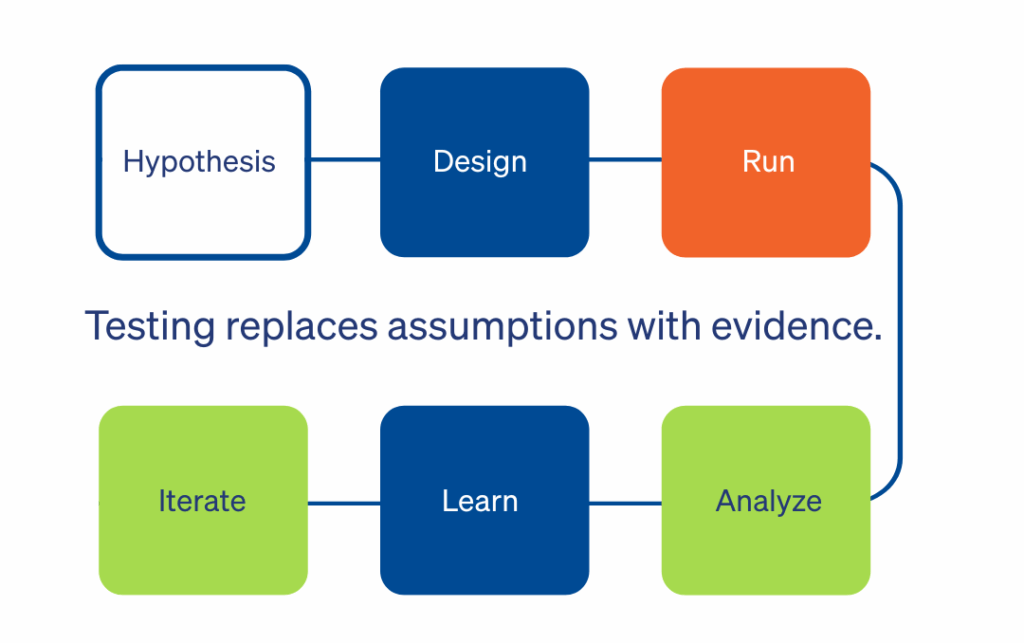
7. Institutionalize the Process
To scale experimentation, create a repeatable system:
- Capture all ideas in a shared backlog
- Prioritize using a framework (e.g., impact vs. effort)
- Define hypotheses and success metrics
- Run controlled tests
- Share results across teams
Consistency transforms experimentation from a tactic into an operating model.
The Experimentation Maturity Model
Use this framework to assess your organization’s progress:
Level 1: Ad Hoc Testing
Occasional tests with no structure
Level 2: Structured Experimentation
Defined hypotheses and processes
Level 3: Cross-Functional Testing
Multiple teams actively testing
Level 4: Data-Driven Organization
Decisions consistently backed by data
Level 5: Continuous Optimization Engine
Experimentation is embedded into daily operations

Examples of Experimentation Culture in Action
- eCommerce brands optimizing checkout flows to reduce friction
- SaaS companies testing onboarding experiences to improve activation
- Media platforms experimenting with content layouts to increase engagement
These organizations don’t rely on assumptions—they validate continuously.
Common Experimentation Mistakes to Avoid
- Running tests without clear hypotheses
- Ending tests too early without sufficient data
- Focusing only on “wins” instead of insights
- Operating in silos without sharing results
- Lacking a centralized knowledge base
Avoiding these pitfalls accelerates maturity and impact.
Tools That Support Experimentation Culture
A strong experimentation stack typically includes A/B testing and personalization platforms, analytics and behavioral tracking tools and data visualization and reporting dashboards. The tools matter, but the process and mindset matter more.
Signs You’ve Built an Experimentation Culture
You’ll know experimentation is embedded when:
- Teams ask “Can we test that?” instead of debating opinions
- Experiment results are shared across the organization
- Leadership values insights as much as outcomes
- Testing runs continuously, not just during campaigns
- New employees adopt data-driven thinking quickly
Key Takeaways
- Experimentation culture replaces opinions with data
- Small improvements compound into significant growth
- Leadership and process drive success more than tools
- Cross-functional collaboration strengthens results
- Continuous testing creates a long-term competitive advantage
Frequently Asked Questions
What is an experimentation culture?
An experimentation culture is a system where decisions are driven by testing, data, and continuous learning rather than assumptions.
How do you build an experimentation culture?
Start with leadership alignment, define clear hypotheses, implement testing tools, and create a process for sharing insights across teams.
What is a good experimentation framework?
A common approach is prioritizing tests based on impact, importance, and effort, ensuring resources are focused on high-value opportunities.
Why is experimentation important for growth?
Experimentation reduces risk, improves decision-making, and enables continuous optimization, leading to sustained growth over time.
Final Thoughts
An experimentation culture is not defined by tools; it’s defined by behavior.
Organizations that succeed are not those that guess best, but those that learn fastest. By embedding experimentation into your operating model, every decision becomes an opportunity to improve, adapt, and grow. Over time, this creates a system where optimization is continuous, and growth becomes inevitable.