The Blueprint for AI-Driven Success

Honey Olesen

A rtificial intelligence is reshaping the business landscape, and new terms like AIO, AEO, GEO, and GAO are gaining traction among organizations aiming to leverage AI for meaningful results.

Each concept addresses a different facet of optimization, but when thoughtfully integrated, they form a powerful toolkit for driving business growth, enhancing customer engagement, and staying ahead in a competitive market.

Let’s break down how these four strategies work together to help businesses fully realize the value of AI investments.

Understanding the Four Building Blocks

For businesses looking to harness AI, it’s essential to understand how each of these pillars supports practical goals:

  • AIO (Artificial Intelligence Optimization): AIO focuses on making your AI systems operate more efficiently, faster, and with greater accuracy. This might mean refining an AI-powered personalization engine so it delivers recommendations instantly, or reducing server costs by optimizing model performance. For any business relying on AI—whether for analytics, automation, or direct customer interaction—AIO ensures the technology foundation is robust and reliable.
  • AEO (Answer Engine Optimization): With consumers increasingly searching for direct answers—through search engines or voice assistants—a business’s content needs to be structured to provide those answers quickly and clearly. AEO techniques ensure your website’s information surfaces as a trusted solution in response to customer queries, improving visibility and reducing friction in the buyer’s journey.
  • GEO (Generative Engine Optimization): As generative AI tools become central to information discovery, GEO involves preparing your business’s digital assets to be recognized and used by these advanced engines. By optimizing content, data, and brand signals, you enable generative AI systems to accurately represent your expertise when generating content for users or business customers.
  • GAO (Generative AI Optimization): GAO takes optimization beyond content and search by systematically adopting generative AI to improve products, services, and operations. This could involve using generative AI to streamline support, personalize marketing at scale, or develop entirely new digital offerings, all within a scalable, ethical framework.

business owner working on GAO: AI Strategy

How These Strategies Create Business Value

While each pillar has its strength, the real transformation comes from a unified approach. Let’s see how they work together in practice:

1. Building a High-Performance AI Foundation with AIO

Every AI-driven business starts with robust infrastructure. AIO ensures your AI models—whether powering search, recommendations, or business analytics—deliver results efficiently. With optimized AI, you can scale operations, reduce response times, and limit infrastructure expenses. For example, an e-commerce company can process shopper behavior data in real time, delivering instant, relevant recommendations to boost engagement and sales.

2. Making Your Business Discoverable with GEO

Once your AI foundation is strong, GEO prepares your business to be found and cited by generative AI engines. Optimizing structured data, publishing in-depth resources, and maintaining up-to-date brand information all help ensure that when AI applications generate summaries or answers, your business is included as a reliable expert. This increases your brand’s reach, influences buying decisions, and builds authority with both humans and AI-driven platforms.

3. Becoming the Go-To Source with AEO

Modern customers expect clear, authoritative answers at their fingertips. AEO streamlines your website and content so that when existing or prospective customers have questions, your business provides the solutions directly in featured snippets, FAQs, and voice search responses. This not only attracts more qualified leads but also shortens the path from search to action, driving conversions and customer satisfaction.

4. Turning Capability into Impact with GAO

With a solid AI infrastructure, discoverable expertise, and optimized answers, GAO empowers your business to activate these assets throughout your operation. By embedding generative AI into customer service, marketing automation, or product development, you can personalize interactions, generate tailored proposals, or design new workflows—creating measurable business impact and allowing your organization to adapt rapidly to changing market conditions.

A Practical Example: Unified AI Optimization in Action

Consider a SaaS company adopting a comprehensive AI strategy:

  1. AIO optimizes its recommendation engine and chatbots, enhancing speed and relevance while controlling computational costs.
  2. GEO ensures that detailed product guides and success stories are recognized by generative AI tools, making the company’s expertise visible in synthesized industry insights.
  3. AEO structures onboarding resources, knowledge bases, and service pages for maximum visibility in search and direct answers. Customers find helpful content easily, improving satisfaction and reducing support tickets.
  4. GAO integrates generative AI models to generate custom implementation strategies and support documentation for each client, based on their specific configurations.

The result? Better customer acquisition through increased visibility, greater retention due to responsive support, streamlined internal operations, and scalable marketing and product innovation—all built on a shared, optimized AI backbone.

The Competitive Edge: Why Integration Matters

Businesses that embrace AIO, AEO, GEO, and GAO as a holistic framework experience several key benefits:

  • Faster, Data-Driven Decision Making: Optimized AI supports real-time analytics and actionable insights.
  • Higher Customer Engagement: Discoverability and direct answers meet users’ needs where and when they search.
  • Operational Efficiency: Generative AI unlocks automation and creativity at scale, reducing manual effort.
  • Future-Proof Digital Presence: Being recognized as a trusted authority by both users and AI platforms secures your place in tomorrow’s business landscape.

Taking the Next Step

Adopting this unified strategy doesn’t require an overhaul of your existing operations. Start by evaluating existing AI systems and content for optimization opportunities. Structure your digital assets to answer core customer questions, and focus on becoming a source of knowledge in your industry. Invest incrementally in generative AI capabilities and look for high-impact workflows to transform with GAO.

As businesses accelerate their adoption of AI, those who connect the dots between AIO, AEO, GEO, and GAO will be best positioned to lead. By viewing these four strategies not as isolated buzzwords, but as interconnected pillars supporting practical goals, your organization can drive sustainable growth, foster lasting customer relationships, and thrive in an AI-powered world.

Do You Have an AI Strategy?

What is AIO? How AI Optimization Powers Smarter Website Performance

Honey Olesen

A rtificial Intelligence Optimization (AIO) is quickly becoming a cornerstone for savvy businesses.

Most conversations about AI and your website focus on one question: are you showing up when AI platforms like ChatGPT or Perplexity answer questions in your space? That’s GEO and AEO territory and they matter enormously.

But there’s a second question that’s equally important: once a visitor lands on your site, is AI working to convert them?

AI Optimization (AIO) is the third discipline in BlueBolt’s GAO framework. Where GEO and AEO focus on getting your brand found and cited by AI platforms, AIO focuses on using AI to make your website itself perform better personalizing experiences, improving conversion rates, and automating the optimizations that used to require constant manual effort.

Think of it this way: GEO and AEO bring the right visitors in. AIO makes sure your site converts them when they arrive.

A quick note on terminology: AIO gets used two different ways in the industry. Some use it to mean using AI tools to produce content faster a workflow efficiency play. BlueBolt’s definition is different and more specific: AIO is about using AI to improve how your website performs for visitors once they arrive. Personalization, conversion rate optimization, on-site search, load performance. If GEO and AEO are about getting found, AIO is about what happens next. That distinction matters, and it’s what this post covers.

Defining Artificial Intelligence Optimization for Websites

As the on-site performance component of BlueBolt’s GAO framework, AIO is the process of using intelligent algorithms to fine-tune and automate vital website functions. Rather than relying solely on manual setups or traditional analytics, AIO makes it possible to continuously test, adapt, and improve elements of your site at scale. Its primary goal? To help your website operate more efficiently: boosting speed, delivering more relevant content, and providing smooth, engaging user journeys.

Think of your website’s recommendation engine, search bar, or personalized landing pages. These are areas where AI can make micro-adjustments, improving what products show up first, which blog posts get recommended, or how content is structured for different users. Through AIO, you can continually optimize these experiences, turning one-time visitors into repeat customers.

AIO doesn’t replace GEO or AEO; it completes them. A brand that earns AI citation through GEO work but sends visitors to a poorly optimized site loses the opportunity GEO created. The three disciplines are most powerful when they operate together under a unified GAO strategy.

How AIO is Transforming Businesses

AIO is already making significant impacts by unlocking new avenues for growth, engagement, and efficiency:

  • Personalized Content Delivery: AI can quickly analyze user behavior and preferences to recommend relevant blog posts, videos, or products. AIO takes this a step further by automatically testing and optimizing which recommendations drive the most engagement or sales, and then implementing changes in real time.
  • On-Site Content Intelligence: AIO analyzes how visitors interact with your content, which pages drive engagement, where users drop off, which CTAs convert, and surfaces recommendations for improvement. This is distinct from GEO and AEO, which optimize for how AI platforms find and cite you externally. AIO optimizes what happens after they arrive.
  • Conversion Rate Optimization (CRO): From A/B testing call-to-action buttons to personalizing homepage layouts by user segment, AIO streamlines traditional CRO tactics. AI-powered platforms can simultaneously test hundreds of variations and automatically adjust to the layouts or offers that drive the best results.
  • Faster Load Times and Technical Performance: AIO tools can monitor site speed and automatically compress images, adjust scripts, or recommend optimizations. These improvements not only enhance user experience but can also positively affect SEO rankings.

Key Benefits and Use Cases of AIO for Websites

Within BlueBolt’s GAO program, AIO delivers measurable on-site gains that compound the visibility work done through GEO and AEO. Core benefits include:

  • Enhanced User Experience: Deliver content, products, and layouts that are most relevant for each individual visitor. With AIO-driven personalization, websites feel more engaging and intuitive, reducing bounce rates and increasing time on site.
  • Increased Conversions and Revenue: By optimizing every step of the user journey, from navigation to checkout, AIO helps convert more visitors. Whether you run an eCommerce shop or provide digital services, AIO can uncover the subtle changes that lead to more sales.
  • Operational Efficiency: Reduce the manual work in tasks like SEO updates, content recommendations, or A/B testing. Your marketing and development teams gain more time to focus on strategy and growth.
  • Real-Time Adaptation: Website trends can shift rapidly. With AIO, your site can learn and respond to new user behaviors on the fly, adapting content, offers, or experiences as needed.

Practical Applications:

  • Dynamic Page Optimization: Automatically test headlines, layouts, CTAs, and content sequencing across visitor segments. AI identifies which combinations drive engagement and implements changes in real time, replacing the slow cycle of manual A/B testing.
  • On-Site Search Intelligence: AI-powered search understands intent, not just keywords surfacing the right product or page even when a visitor’s query doesn’t match exact terminology. It also surfaces patterns: what people are searching for that you don’t have, or can’t find.
  • Conversion Path Analysis and Optimization: AIO tools identify where visitors drop off, which pages stall decisions, and which CTAs convert by segment then surface specific recommendations for improvement rather than leaving teams to interpret raw analytics.
  • Predictive Personalization: Serve different homepage layouts, featured content, or offers based on traffic source, prior behavior, or firmographic signals. A visitor arriving from a ChatGPT referral has a different context than one from organic search. AIO lets your site respond accordingly.

Challenges and Considerations

While the promise of AIO is significant, it’s important for businesses to be mindful of a few challenges:

  • Complexity and Oversight: Fully automated changes should still be overseen by your team to maintain brand voice and ensure changes align with your business goals.
  • Data Privacy and Ethics: When using visitor data for personalization, ensure you’re up to date with privacy regulations and that your AI systems are transparent and fair in their recommendations.
  • Keeping AIO Aligned with GEO and AEO: As AI platforms evolve, the signals that drive external citation (GEO/AEO) and the signals that drive on-site conversion (AIO) need to stay coordinated. Optimizing one in isolation can create mismatches, for example, driving high AI referral traffic to pages that aren’t conversion-optimized. BlueBolt’s GAO framework manages all three disciplines together to prevent this.
  • Computational Scale: At the enterprise level, AI optimization at scale requires meaningful computing resources and data volume. For mid-market businesses, this is less of a barrier than it used to be AI-powered personalization and CRO tools are increasingly accessible, and BlueBolt scopes AIO implementation to what’s appropriate for your business size and goals, not the maximum possible footprint.
super computers

The Future of AIO in Website Optimization

As artificial intelligence continues to advance, so will the ways it optimizes websites. Future AIO systems are expected to become even more “intelligent”; automatically adjusting for seasonality, user trends, device types, and more. We’ll see a greater focus on explainability (understanding why a certain change was made), making it easier for website teams to trust and adopt AIO-driven recommendations.

Additionally, with advances in low-code and no-code platforms, even smaller website operators will be able to harness the benefits of AIO, democratizing access to powerful optimization tools previously reserved for large enterprises.

One trend worth watching specifically for AIO: the rise of AI-powered shopping agents. As platforms like ChatGPT begin facilitating purchases directly, not just answering questions, the line between AI citation (GEO) and on-site conversion (AIO) will blur. Businesses that have both disciplines running in a coordinated program will be positioned to capture that traffic end-to-end. This is exactly why BlueBolt built AIO as a component of GAO rather than a standalone service.

Frequently Asked Questions

What does AIO stand for?

AIO stands for AI Optimization. In BlueBolt’s GAO framework, AIO refers specifically to using artificial intelligence to improve on-site website performance — personalization, conversion rate optimization, load times, and user experience.

How is AIO different from GEO and AEO?

GEO and AEO focus on getting your brand found and cited by external AI platforms like ChatGPT and Perplexity. AIO focuses on what happens once a visitor lands on your site — making sure AI is working to convert them. All three are components of BlueBolt’s GAO framework.

Do I need AIO if I’m already doing SEO?

Traditional SEO and AIO address different problems. SEO optimizes for search engine rankings. AIO optimizes for on-site behavior, personalization, and conversion — using AI to make decisions that previously required constant manual testing and adjustment.

Is AIO only for large enterprises?

No. While enterprise platforms have led adoption, AI-powered personalization and CRO tools are increasingly accessible to mid-market businesses. BlueBolt implements AIO at a scope appropriate to each client’s size and goals.

How BlueBolt Implements AIO

BlueBolt’s AIO work begins with a site performance audit tied to the GAO Readiness Assessment — identifying where AI-driven optimization will have the highest impact for your specific business. From there, implementation follows a phased approach:

  • Phase 1: Baseline audit of personalization, CRO, and on-site search performance
  • Phase 2: Implementation of AI-driven recommendations, A/B testing frameworks, and dynamic content tools
  • Phase 3: Ongoing monitoring and reporting, integrated with GEO and AEO metrics in the unified GAO dashboard

AIO works best when it’s not a standalone initiative. As part of the full GAO program, every on-site improvement is measured against the AI visibility gains happening in parallel.

Is your website converting the AI-driven traffic you’re working to earn?

What is AEO? How Answer Engine Optimization Gets You Featured in AI and Search Responses

Honey Olesen

A s the digital landscape rapidly changes, businesses are encountering a new era of search.

When someone types a question into Google and gets a direct answer without clicking any links, or asks Alexa a question and gets a single spoken response, that’s an answer engine at work. And either your content is the source it draws from, or someone else’s is.

Answer Engine Optimization (AEO) is the discipline of structuring your content to win those featured positions. It is one of three components in BlueBolt’s GAO framework, sitting alongside GEO (which targets broader AI platform citation) and AIO (which optimizes on-site performance). Where GEO is about being recommended by AI, AEO is about being selected as the direct answer.

AEO has expanded beyond featured snippets and voice search. Today, it covers the full range of direct-answer surfaces, including AI Overviews, ChatGPT, and Perplexity, anywhere a platform synthesizes an answer rather than returning a list of links. The structural principles are the same: content that is concise, authoritative, and machine-readable. The stakes are higher, because AI-generated answers increasingly replace the click entirely.

What is Answer Engine Optimization (AEO)?

Answer Engine Optimization (AEO) is a strategic approach to structuring and presenting your website’s information so that search engines, virtual assistants, and AI-powered platforms can easily extract and display accurate answers to user queries. Instead of only vying for traditional organic rankings, businesses now need to position their content for inclusion in featured snippets, “People also ask” boxes, and voice search responses.

AEO leverages advances in natural language processing and conversational AI. Search platforms are continuously improving at interpreting questions and discerning which website offers the most authoritative answer. If your website delivers that concise, useful answer, you can earn visibility that was once only possible through paid or top organic listings.

Within BlueBolt’s GAO framework, AEO is the discipline most directly tied to traditional search infrastructure, Google’s featured snippets, People Also Ask boxes, and voice assistant responses, while GEO extends that visibility into the generative AI platforms like ChatGPT and Perplexity that don’t use traditional search ranking at all.

Why Should Businesses Care About AEO?

For businesses, the transition to zero-click searches (where users get their answers directly from the results page) is reshaping digital competition. Here’s why AEO matters:

  • Maximize Visibility in Search: Achieving a featured snippet or a voice search response places your website at the very top, often above even paid ads. This prime placement drives more awareness, even if users don’t always click through.
  • Build Authority and Trust: Being selected as the answer source signals to users (and algorithms) that your business is a trusted expert in your field. This credibility can increase conversions and customer loyalty.
  • Engage Voice-First Audiences: With more searches happening via mobile and smart speakers, concise, well-structured answers tailored to voice interfaces can expand your reach to new segments.
  • Outpace Competitors: In the answer box, the winner truly takes all. Outranking competitors in this space means you become the go-to resource, increasing brand recall and consideration.
  • Bridge Between Traditional Search and AI Discovery: AEO-optimized, answer-first content structure, FAQ schema, and authoritative sourcing are also foundational to effective GEO work. Getting AEO right doesn’t just win featured snippets; it builds the content infrastructure that makes your brand more citable across ChatGPT, Perplexity, and Google AI Overviews simultaneously. It’s the highest-leverage starting point in the GAO program.
laptop screen with deepseek

AEO Strategies Tailored for Businesses

To become the answer that search engines select, consider these proven strategies:

1. Identify and Prioritize High-Value Questions

Use analytics, customer interactions, and tools like Google’s “People also ask” or site search logs to discover the specific questions your customers are asking about your services, industry, or products.

2. Deliver Clear, Concise Answers

Provide direct responses to these questions within your content. Use language that is accessible and includes the relevant keywords naturally. A rule of thumb: keep answers between 40–60 words and make them easy to find within the page.

3. Structure Content for Both Users and Machines

Divide your content into clear headings (H1, H2, H3), use bullet points and numbered lists for step-by-step guidance, and consider summary tables. Implement FAQ and How-To sections, and use schema markup (such as FAQPage and QAPage) to help search engines identify and extract your answers.

3a. Configure llms.txt and AI Crawler Settings

AEO increasingly extends beyond Google. Ensuring your robots.txt allows AI crawlers from OpenAI, Anthropic, and Google, and implementing llms.txt to signal your most authoritative content, applies AEO principles to the AI platform layer. BlueBolt handles this as part of every GAO technical implementation.

4. Optimize for Featured Snippets and Rich Results

Analyze which search features appear for your key terms (paragraph snippets, lists, tables) and match your content format to what is commonly displayed. Providing instruction-based content or clear definitions can increase your chances of being featured.

5. Build Topical Authority

Develop content clusters around your core expertise. Interlink related articles and resources to showcase depth and breadth, making it easy for search engines to see your site as a comprehensive authority on your subject.

6. Prepare for Voice and Conversational Search

Voice assistants often present the single, best answer. Use conversational, natural language in your answers and anticipate the kinds of questions people might ask aloud (“How do I…?”, “What is the best way to…?”).

7. Build Author Authority Infrastructure

Search engines and AI platforms weigh E-E-A-T signals heavily when selecting answer sources. Content attributed to recognizable, credentialed authors earns more citations than byline-free pages.

Key Benefits for Businesses

AEO has the potential to deliver benefits that compound with GEO and AIO work running in parallel:

  • Prominent Placement Without Paid Ads: Secure top-of-page positions organically, often above traditional search results.
  • Boosted Brand Trust: Consistently being sourced for answers builds a reputation of reliability with both users and search engines.
  • Increased Engagement: Even when users don’t click, being the answer source keeps your website top-of-mind, supporting future visits and conversions.
  • Stronger Support for New Technologies: As AI, voice search, and chatbots become more prevalent, well-optimized answers will surface across diverse touchpoints, not just search engines.
  • Foundation for the Full GAO Program: AEO-optimized content structured, authoritative, and answer-first is the raw material that GEO and AIO build on. Businesses that start with AEO create a content infrastructure that accelerates results across the entire GAO framework.

Challenges and How to Address Them

AEO isn’t without hurdles. Businesses should be aware of the following:

  • Zero-Click Implications: When AI answers a question using your content, the visit may never happen but the brand impression does. Counter this by treating AEO as a top-of-funnel awareness channel, not just a traffic driver. Structure answers so they establish authority and name your brand explicitly (“BlueBolt’s approach to X is…”) rather than presenting generic information that gets cited without attribution. The goal is that even a zero-click encounter leaves the reader knowing who provided the answer.
  • High Competition: Only a few sources earn featured spots. Regularly update and refine your content to remain at the forefront.
  • Keeping Content Fresh: Out-of-date answers lose authority; schedule regular content reviews.
  • Technical Implementation: Structured data and page speed improvements may require investment in web development, but the payoff in visibility can be significant.
  • Changing Algorithms: Keep up with SEO and AEO best practices to adapt swiftly when search engines update their answer selection criteria.
  • Coordination Across GAO Disciplines: AEO implemented in isolation can create gaps, for example, winning a featured snippet but having no GEO strategy for the same query in ChatGPT, or driving answer-engine traffic to pages that aren’t AIO-optimized for conversion. BlueBolt’s GAO framework manages AEO alongside GEO and AIO to prevent these gaps from undermining each other.

The Future: Why AEO is Essential for Website Success

The answer engine landscape is expanding beyond Google faster than most businesses realize. Google AI Overviews, ChatGPT’s Browse mode, Perplexity, and voice assistants are all answer engines, each with different technical requirements for citation. AEO as a discipline is evolving to cover all of them, not just featured snippets.

The businesses best positioned for this shift are the ones building structured, authoritative, consistently maintained content now, not waiting until a new platform reaches mainstream adoption. In BlueBolt’s experience, the technical foundation of good AEO work transfers directly to GEO performance on newer AI platforms. The two disciplines share more than they diverge, which is exactly why GAO treats them as complementary rather than competing priorities.

Looking ahead, expect answer platforms to introduce more explicit source attribution, creating direct traffic and credibility benefits for cited businesses. Structured, E-E-A-T-rich content will be the determining factor in who gets attributed and who gets omitted.

Frequently Asked Questions

What does AEO stand for?

AEO stands for Answer Engine Optimization. It is the practice of structuring website content to be selected as the direct answer in Google featured snippets, voice search responses, People Also Ask boxes, and AI-generated answer platforms.

How is AEO different from SEO?

Traditional SEO optimizes for ranking position in a list of search results. AEO optimizes for being selected as the single featured answer, which appears above organic rankings and is increasingly the only result a user sees or hears.

How is AEO different from GEO?

AEO targets structured answer positions primarily in Google and voice assistants. GEO targets citation and recommendation within generative AI platforms like ChatGPT, Perplexity, and Gemini. The techniques overlap significantly, which is why BlueBolt implements both under the unified GAO framework rather than as separate engagements.

What is the relationship between AEO and BlueBolt’s GAO program?

AEO is one of three disciplines in BlueBolt’s GAO framework, alongside GEO and AIO. It is typically the first phase of implementation because strong AEO content infrastructure accelerates results in GEO and AIO work that follows.

Conclusion

AEO is where most GAO programs begin because structuring content for direct answers lays a foundation that benefits every other discipline in the framework. Get AEO right, and GEO and AIO work becomes faster and more effective.

Find out if your content is structured to win featured answers.

What is GEO? How Generative Engine Optimization Gets Your Brand Cited by AI

Honey Olesen

W hen someone asks ChatGPT to recommend a B2B ecommerce platform, or asks Perplexity which agency specializes in Shopify migrations, the answer they get isn't a list of links. It's a synthesized response; pulled from sources the AI has already decided are authoritative.

If your brand isn’t one of those sources, you’re not in the conversation.

Generative Engine Optimization (GEO) is the discipline of ensuring your business is one of the sources AI platforms draw from when composing those answers. It sits at the core of BlueBolt’s GAO framework, alongside AEO and AIO, and it’s the component most directly tied to AI-driven discovery and brand visibility. GEO’s specific job is the middle layer: ensuring that platforms like ChatGPT, Perplexity, and Google AI Overviews recognize your brand as a credible, relevant source when they generate responses in your space.

This post covers what GEO is, why it’s structurally different from traditional SEO, and the specific steps BlueBolt uses to build AI citation authority for clients.

What is Generative Engine Optimization (GEO)?

GEO is one of three disciplines within BlueBolt’s GAO framework. Where AEO focuses on structured answers in traditional search, and AIO focuses on AI-powered website performance, GEO specifically addresses how generative AI platforms (ChatGPT, Perplexity, Gemini, Google AI Overviews) understand, reference, and recommend your brand.

The practical goal of GEO is simple: when an AI platform composes an answer relevant to your business, your content should be a source it draws from and your brand should be one it recommends.

Why GEO Matters for Website Businesses

AI search isn’t replacing traditional search overnight, but it’s already a parallel discovery channel that most businesses aren’t optimizing for. Here’s why that matters:

  • Direct Responses Over Click-Throughs: Increasingly, users ask AI tools questions and receive direct answers instead of scrolling through website links. Your website must be structured so generative engines can include your content in those answers.
  • Brand Authority and Trust: AI-generated responses reflect the data they ingest. If your website has accurate, well-structured, and up-to-date content, you position your business as a reliable source, enhancing trust and authority in your space.
  • Cross-Platform Presence: Generative AI powers numerous platforms, from voice-activated speakers to chatbots on ecommerce sites. GEO ensures your site shows up wherever potential customers interact with intelligent systems, not just in traditional search engines.
  • Mitigating Misinformation: Proper GEO practices help prevent generative engines from misrepresenting your business or displaying outdated information, protecting your brand’s online reputation.
  • Your competitors are mostly unprepared: Structured GEO implementation is still early-stage for most industries. Businesses that establish AI citation authority now build a compounding advantage that is increasingly difficult for late movers to close.
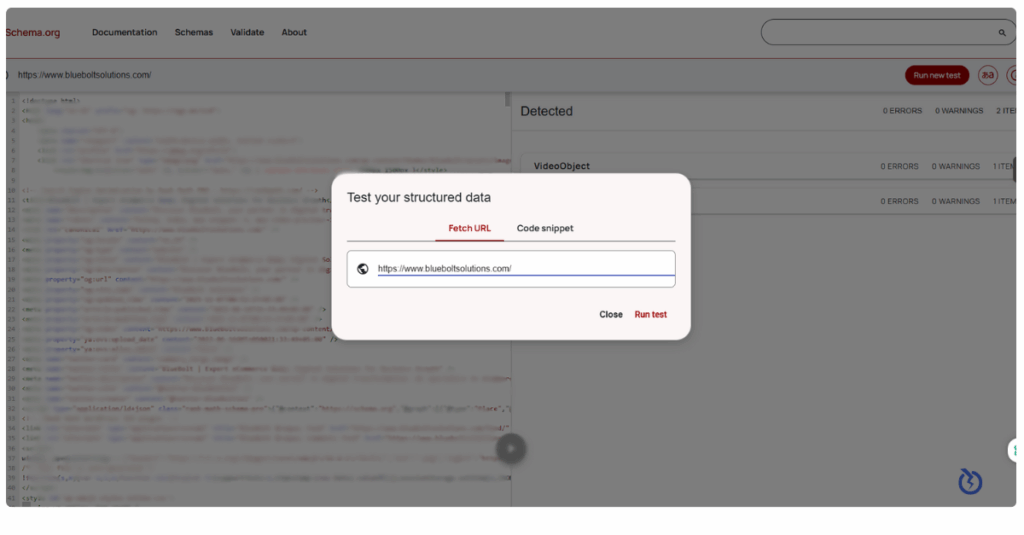
Example of Schema.org url test for GEO

GEO Strategies That Build AI Citation Authority

GEO isn’t a checklist; it’s a signal-building process. AI platforms like ChatGPT and Perplexity don’t publish their citation criteria, but current research and ongoing testing point to consistent patterns. Here’s what actually moves the needle.

1. Implement Structured Data and Schema Markup — Specifically for AI Extraction

Schema markup isn’t new, but its role in GEO is more targeted than in traditional SEO. The goal isn’t just to help Google parse your page; it’s to give AI crawlers unambiguous signals about who you are, what you do, and why you’re authoritative.

Priority schema types for GEO:

  • Organization: name, URL, logo, founding date, social profiles. Establishes entity identity.
  • FAQPage: direct Q&A pairs that AI can extract verbatim as answer candidates.
  • HowTo: step-by-step content that matches instructional query patterns.
  • Article with author, datePublished, and publisher: E-E-A-T signals AI models use to evaluate source credibility.

If your structured data isn’t implemented or is inconsistent across pages, AI systems have less confidence in your content, and lower-confidence sources get cited less.

2. Build Content Around the Questions AI Is Already Answering

GEO starts with understanding what’s being asked, not just what you want to rank for. Run the queries your buyers are likely to use in ChatGPT or Perplexity, “best Shopify Plus agency for B2B,” “how to migrate from Magento to BigCommerce,” “what does an ecommerce discovery phase include”, and see what sources get cited. Those are your competitors in AI search.

A 2024 study from Princeton, Georgia Tech, and the Allen Institute for AI (the paper that formally introduced GEO as a discipline) tested nine optimization tactics across 10,000 queries and found that adding citations, statistics, and quotations improved AI visibility by up to 40%. Content that consistently earns citations in practice shares a few structural traits:

  • Answer-first format: the direct response appears in the first 1–2 sentences, before supporting detail
  • Concise, low-ambiguity language: AI models prefer content that doesn’t require interpretation
  • Clear headings: H2/H3 structure that maps to how questions are phrased
  • Topic completeness: covering the full question, not just a partial answer

3. Establish Your Brand as a Named Entity

AI platforms reason about entities, brands, people, products, and locations, not just keywords. If your brand name, key personnel, and core services don’t appear consistently across your own site, third-party mentions, and structured data, LLMs will have weak entity signals for you.

Practically, this means:

  • Author bios tied to published content (name, title, area of expertise, link to LinkedIn)
  • Consistent brand name and service descriptions across your site, press mentions, partner pages, and directories
  • Building coverage on platforms LLMs draw from heavily: industry publications, G2/Capterra reviews, LinkedIn, relevant Reddit threads, and Wikipedia if applicable

4. Audit and Control What AI Crawlers Can Access

Many sites are inadvertently blocking AI bots through misconfigured robots.txt files or Cloudflare settings. If AI platforms can’t crawl your pages, they can’t cite them.

Key technical checks:

  • Review robots.txt for disallow rules that catch AI user agents (GPTBot, PerplexityBot, ClaudeBot, Google-Extended)
  • Implement or audit your llms.txt file — an emerging standard that gives AI models direct guidance on which content is authoritative and how to represent your brand
  • Confirm that important content is server-rendered, not client-side only, AI crawlers don’t execute JavaScript the way browsers do
  • Verify canonical tags are clean, so AI systems don’t fragment your authority across duplicate URLs

5. Monitor What AI Is Actually Saying About You

GEO without measurement is guesswork. BlueBolt’s AI visibility audits assess how your brand currently appears or doesn’t across ChatGPT, Perplexity, Gemini, and Google AI Overviews. That means running structured prompt sets in your category, capturing citation rates, and identifying gaps by topic, competitor, and query type.

What you’re tracking:

  • Mention rate: how often your brand appears across a defined set of prompts
  • Citation accuracy: whether what AI says about you is correct and current
  • Competitive share of voice: who’s getting cited when you’re not, and why
  • Sentiment: whether the framing is favorable, neutral, or problematic

Examples of GEO in Action for Businesses

These are the business types where BlueBolt’s GEO work has the most immediate impact:

  • eCommerce Stores: By adding structured product data and up-to-date inventories, retailers can have their items highlighted in AI-driven shopping assistants or voice purchase flows.
  • Service Providers: Clear service descriptions and FAQs, formatted with schema, help AI chatbots and voice agents recommend your services accurately to potential customers.
  • Local Businesses: Consistent map data, reviews, and contact information allow generative engines to provide the right information in local searches or in-car voice systems.
  • Content Publishers: Educational websites and blogs that offer open, well-organized content see their articles, guides, or resources cited and summarized in AI-powered learning and discovery platforms.

In each case, the underlying work is the same: structured data, authoritative content, technical AI readiness, and consistent monitoring delivered as part of the BlueBolt GAO program.

GEO is an ongoing practice, and several trends are influencing its future:

  • AI platforms are beginning to facilitate purchases, not just answer questions. ChatGPT’s shopping integrations and Perplexity’s commerce features mean the line between “AI cites your brand” and “AI sells your product” is already blurring. For ecommerce businesses, GEO citation authority is becoming a direct revenue channel not just a visibility metric. Brands that are already recognized sources for AI platforms will be the first ones recommended when those platforms begin completing transactions.
  • Agentic AI will raise the bar on structured data. As AI agents begin executing tasks autonomously, comparing vendors, shortlisting agencies, and filling out contact forms, they’ll depend even more heavily on clean, machine-readable signals. Businesses with consistent entity data, well-implemented schema, and accessible llms.txt files will be preferred sources for agent-driven decisions. Incomplete or inconsistent structured data won’t just hurt citations — it will exclude you from consideration entirely.
  • Citation attribution is becoming visible to end users. AI platforms are under increasing pressure to show where their answers come from. As that attribution becomes more prominent in the UI, being a cited source transforms from an invisible influence into a direct brand awareness moment. GEO work done now builds the citation record that will be surfaced to users as transparency standards evolve.
  • Share of model becomes a tracked metric like share of voice. Within 12–18 months, AI visibility dashboards will be as standard as SEO rank trackers. Mention rate, citation accuracy, and competitive share of voice across ChatGPT, Perplexity, and Gemini will be reported metrics in every serious marketing review. The brands that have already established baselines through a structured GEO program will have a measurable head start on competitors who are just beginning to audit.

Frequently Asked Questions

What is GEO in digital marketing?

GEO stands for Generative Engine Optimization. It is the practice of structuring your website’s content and technical infrastructure so that AI platforms like ChatGPT, Perplexity, and Gemini cite and recommend your brand in their generated responses.

How is GEO different from SEO?

SEO optimizes for ranking in traditional search engine results pages. GEO optimizes for visibility in AI-generated answers, where there are no rankings only cited sources and omitted ones.

How does GEO fit into BlueBolt’s GAO framework?

GEO is one of three disciplines within BlueBolt’s GAO program, alongside AEO (Answer Engine Optimization) and AIO (AI Optimization). GAO brings all three together into a single managed strategy.

Which AI platforms does GEO target?

The primary platforms BlueBolt optimizes for are ChatGPT, Perplexity, Google Gemini, and Google AI Overviews. As new AI search platforms emerge, the GAO program adapts accordingly.

Conclusion

GEO occupies a specific, critical role in the AI discovery stack: it’s how your brand earns the right to be cited before a potential buyer ever visits your site.

But GEO doesn’t work in isolation. The content authority you build through GEO feeds the answer extraction that AEO depends on. The traffic GEO generates needs AIO to convert. And both are most effective when managed together under a unified GAO strategy with visibility audits, structured implementation, and reporting that connects AI citation signals to actual business outcomes.

The window to establish GEO position is open right now. Most businesses in your space haven’t run a single AI visibility audit. The brands that build citation authority early will be harder to displace as AI search matures — for the same reason early SEO movers still hold organic authority today.

If you want to know where your brand stands in AI-generated answers, that’s where BlueBolt starts.

Find out if your brand is showing up in AI search

Need a great partner?
We would love to connect.

Rather talk to someone? Call + 312 316 0295